Chimney, Dryer Vent and Air Duct FAQ
Serving Brooklyn and nearby cities.
- Diagnosis before any repair
- Written price up front
- Written price before we start
Brooklyn homeowners tend to ask us many of the same questions about chimneys, fireplaces, dryer vents and air ducts. We've gathered the most common ones below, grouped by topic, so you can find answers before you book. If your question isn't covered here, send it our way and we'll help.
How to Reach Us
The easiest way to reach EliteFlue is through the contact form on this website. Tell us your address, the type of building you live in, and what you need, whether that's a routine sweep, an inspection, or a problem you've noticed. The more detail you share, the better we can plan the visit.
- Say whether you live in a house, rowhouse or apartment building
- Describe any smoke, odors, leaks or animal sounds you've noticed
- Tell us how the roof is reached, if you know
- List a few days and times that work for you
FAQ
Frequently asked questions
How often should my chimney be swept?
The NFPA 211 standard calls for chimneys, fireplaces and vents to be inspected once a year. Sweeping is done when the inspection shows soot, creosote or debris buildup. A fireplace you use often will usually need sweeping more often than one you use a few times a winter.
What happens during a chimney sweep?
We cover the hearth and nearby floor, set up a vacuum to control dust, and brush the flue, smoke chamber and firebox. We also check the damper and look for blockages such as nests or fallen masonry. When we're done, we tell you what we saw and whether anything needs attention.
Does a chimney that only vents my boiler or furnace need service?
Yes. The yearly inspection called for by NFPA 211 applies to chimneys and vents serving heating appliances, not just fireplaces. New York City's heat season runs from October 1 through May 31, so early fall is a sensible time to make sure the flue is clear and in good condition.
What are the different levels of chimney inspection?
Chimney professionals use three levels. Level 1 is the routine check when nothing about the system has changed. Level 2 is for when the system changes, such as a new appliance or a switch of fuel, or when the home is sold. Level 3 is used when a hidden hazard can only be reached by opening part of the chimney or building.
When should I schedule an inspection besides the yearly one?
Book one if you're buying or selling a home, adding or replacing a heating appliance, or changing fuel. It's also wise after a chimney fire, a severe storm, or if you notice smoke backing up, water in the firebox or crumbling brick. These situations often call for a Level 2 inspection.
Why does a chimney need a liner?
A liner protects the masonry from heat and corrosive exhaust and helps the flue draft properly. Older masonry chimneys may have cracked or missing clay tiles, or no liner at all. A liner sized to the appliance it serves keeps exhaust moving out of the house.
We're converting our boiler from oil to gas. What happens with the chimney?
In New York City, the chimney has to be evaluated as part of an oil-to-gas conversion. A new liner is often needed, because gas exhaust produces acidic condensate that can corrode a masonry flue. We can inspect the chimney and install a liner suited to the new boiler.
What are signs my chimney needs repair?
Watch for flaking or crumbling brick, missing mortar, white staining on the outside of the chimney, rust on the damper, or water in the firebox. Inside, a strong odor or pieces of tile in the fireplace are warning signs. Catching these early usually means a smaller repair instead of rebuilding part of the chimney.
What does a chimney cap or chase cover do?
A chimney cap sits over the top of the flue and keeps out rain, animals, leaves and debris. A chase cover is a metal top used on framed chimney chases, often seen with factory-built fireplaces. Both help stop water from getting into the chimney and causing damage.
Is chimney waterproofing a good idea?
Brick and mortar absorb water, and freeze-thaw cycles can break them down over time. A breathable water repellent helps keep moisture out while letting the masonry dry. It works best after any needed masonry repairs are made, so we check the chimney's condition first.
How do I know if my dryer vent needs cleaning?
Common signs are clothes taking longer to dry, the dryer or laundry room feeling hot, a burning smell, or lint collecting around the outside vent flap. According to the U.S. Fire Administration, failure to clean is the leading factor in home clothes dryer fires. Cleaning out the full vent run, not just the lint trap, matters.
Should I have my air ducts cleaned?
The U.S. EPA advises cleaning air ducts when there is substantial visible mold growth, signs of vermin, or excessive dust and debris. It also notes that duct cleaning hasn't been shown to prevent health problems. We'll look at your ducts and tell you honestly whether cleaning makes sense, and we're careful about any chemical treatments.
What should I do before you arrive?
Please don't use the fireplace the night before so the firebox and ashes are cool. Clear a path to the fireplace, boiler, dryer or vents we're working on, and move fragile items off the mantel. If parking is tight on your block, let us know where we can stop.
How long does a visit take?
It depends on the service and the condition of the system. A routine sweep, inspection or dryer vent cleaning usually fits within part of a morning or afternoon. Liner installation, larger repairs and rebuilding can take longer or need more than one visit, and we'll give you a time estimate when we book.
Will the work be messy, and what about my pets?
We lay down drop cloths and use vacuums to contain soot and dust, and we clean up the work area before we leave. Please keep pets in a separate room while we work, since doors may be open and equipment will be on the floor. This keeps your pets calm and safe.
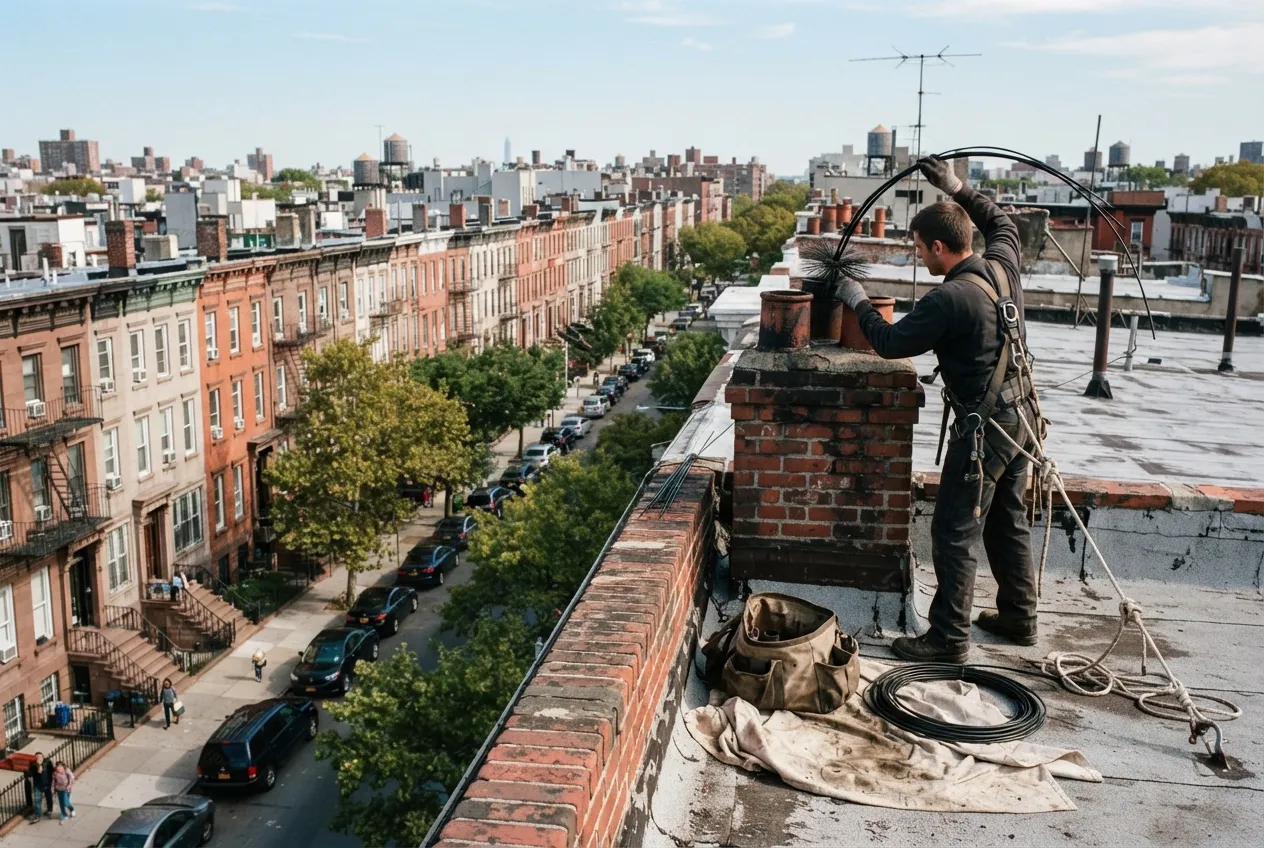
How do you reach the roof in a rowhouse or apartment building?
Many Brooklyn rowhouses and apartment buildings are reached through a roof hatch or bulkhead door. If the roof is controlled by a super, management company or co-op board, please arrange access with them before the visit. Let us know about locked doors, ladders or shared roofs so we can plan ahead.
Schedule a Chimney or Vent Inspection
Tell us what you are noticing and what kind of building you live in. We will inspect, show you what we find, and give you a written price before any work begins.