
The short answer
Dryer vent cleaning removes lint from the full duct run, from the back of the dryer to the outside hood or roof cap. If clothes take longer to dry, the dryer runs hot, or you smell burning, have the vent checked. According to the U.S. Fire Administration, failure to clean is the leading factor contributing to home dryer fires.
Every load of laundry sends lint into your dryer vent, and the lint trap catches only part of it. The rest settles along the duct, at the elbows and behind the exterior hood. There it slows airflow and holds in heat. EliteFlue Chimney Services cleans dryer vents for homeowners in Brooklyn and nearby neighborhoods. We handle short runs that exit a back wall and long ducts that travel through a basement ceiling or up to the roof of a row house. This page covers what to watch for, what our certified technicians do, and how a visit works.
Signs you need it
A clogged dryer vent rarely fails all at once. Most owners notice small changes first, and many of them are easy to blame on the dryer itself.
If you smell burning, stop using the dryer until the vent has been checked.
- Clothes need two or more cycles to dry, or towels come out damp at the seams
- The dryer cabinet, the laundry area or the clothes feel unusually hot
- A burning or scorched smell when the dryer runs
- Lint collecting around the dryer door, behind the machine or on the floor near the vent
- The flap on the outside vent hood barely opens, or stays shut, while the dryer is running
- Chirping, scratching or nesting material at the exterior vent, a sign that birds or rodents have moved in
- A musty smell or moisture around the duct, which can point to a disconnected or sagging section
- The dryer shuts off mid-cycle or shows a vent or airflow warning
What's included
A standard dryer vent cleaning covers the full run, from the back of the dryer to where the vent ends outside. We don't stop at the part you can see.
- Pulling the dryer out and disconnecting the transition duct
- Inspecting the transition duct and replacing plastic or foil pieces if you approve
- Brushing the entire vent run with rotary brushes sized to the duct
- Vacuuming loosened lint with HEPA-filtered equipment
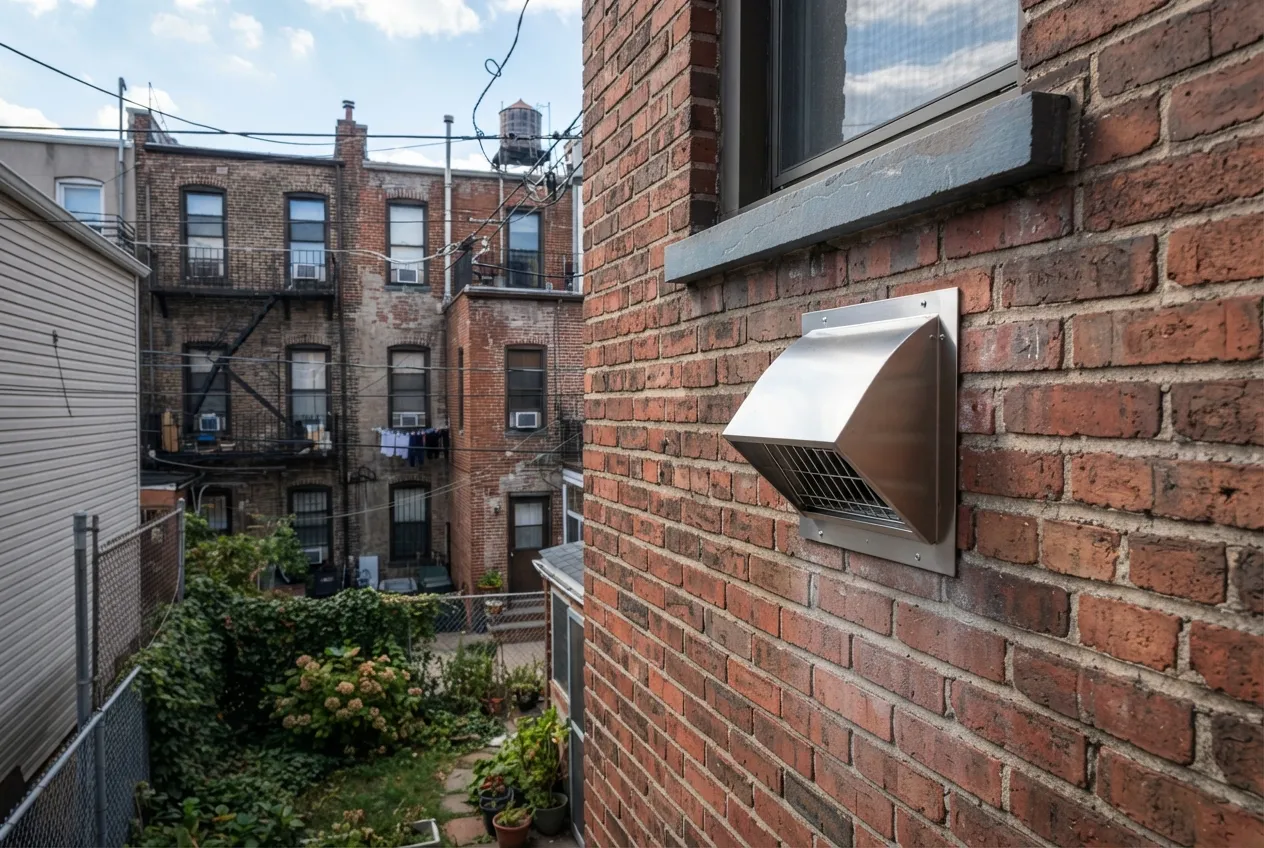
- Clearing the exterior hood or roof cap, including nests and debris where they can be removed safely
- Checking that the hood flap opens and closes freely
- Cleaning lint from the lint trap housing and the area behind and under the dryer
- Reconnecting the dryer and running it to check airflow at the exterior
- A camera inspection inside the duct when the run is long or hidden, or when we suspect damage
- A plain-language rundown of what we found and any repairs we recommend
How the crew works inside your home and on the roof
Inside, the crew lays drop cloths from the door to the laundry area and protects the floor where the dryer is pulled out. Lint is fine and travels easily. We run HEPA-filtered vacuums while brushing and work the rotary brush in sections, so debris is pulled toward the collection point instead of blowing into the room. Dryers in closets or tight basements get moved carefully. When the machine goes back in place, we check that the gas connection or power cord is secure.
Many Brooklyn row houses and multi-family homes vent dryers through a long run to the back of the building or up to the roof. When a vent ends on the roof, a technician works the roof cap from above. They clear lint and nesting material and check for a screen, which catches lint and often causes blockages. Roof work depends on safe access and weather. If conditions aren't safe, we'll tell you and reschedule that part.
When we can't see the whole run, we use a camera. It shows crushed sections, disconnected joints, heavy buildup at elbows, or a nest we couldn't reach from either end.
Why regular cleaning matters
According to the U.S. Fire Administration, failure to clean is the leading factor contributing to clothes dryer fires in homes. Lint is light and burns easily, and a restricted vent traps heat around it. Emptying the lint trap after every load helps, but it doesn't reach lint that has already passed into the duct.
No single schedule fits every home. A household that runs several loads a day will build up lint faster, and so will a long or bending vent or a roof termination. A short, straight run through an outside wall usually stays clear longer. We'll tell you what we saw and when we'd suggest looking again, based on your vent rather than a fixed calendar.
What affects the price
We quote after we understand your setup. The main factors are:
We'll explain any repair before we do it, and you decide whether to go ahead.
- How long the vent is and how many turns it makes
- Where it ends (a ground-level wall, an upper-story wall or the roof) and how safely we can reach it
- Whether the dryer is gas or electric, and how easy it is to move
- How much lint has built up, and whether there's a nest or blockage
- Duct material and condition, including crushed, disconnected or plastic sections
- Whether a camera inspection is needed to see hidden parts of the run
- Any repairs, such as replacing the transition duct, fixing a joint or replacing a damaged hood
How a visit works
When you contact us, we'll ask where the dryer is, where you think the vent comes out, and whether you've noticed any of the signs above. Photos of the dryer connection and the outside vent help us plan.
On the day of the visit, the technician confirms the vent route, protects the work area, and cleans from both inside and outside. Long or roof-terminated vents take longer than short wall runs. Before leaving, we reconnect the dryer, test airflow at the exterior, clean up, and walk you through what we found.
Before we arrive, please clear a path to the laundry area. If the dryer sits in a closet, make room to pull it out. If the vent ends on the roof, tell us how the roof is reached, whether by hatch, bulkhead or an outside ladder.