
The short answer
Yes, EliteFlue Chimney Services serves Brooklyn Heights from our Fort Greene office about a mile away. We handle chimney sweeping, inspections, repairs, liners, waterproofing, and dryer vent and air duct cleaning. Our focus is the older masonry chimneys common in the neighborhood's brownstones, rowhouses and pre-war buildings.
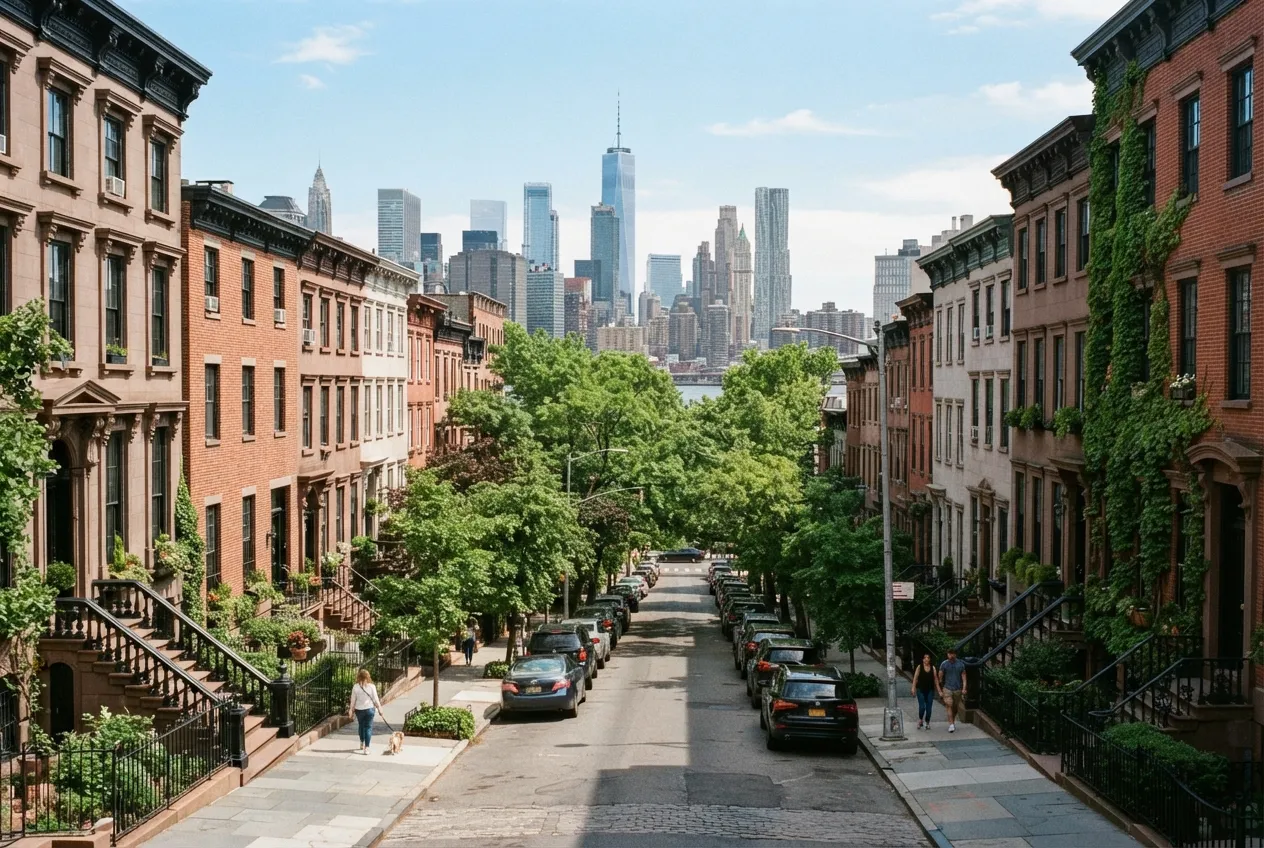
EliteFlue Chimney Services cleans, inspects and repairs chimneys, fireplaces, dryer vents and air ducts for homeowners in Brooklyn Heights. Our office is in Fort Greene, about a mile southeast of the neighborhood, so getting to you is a short trip. Brooklyn Heights is known for older housing: brownstones, brick rowhouses and pre-war apartment buildings. Many of those chimneys were built for coal or wood fires and now vent gas boilers, water heaters or fireplaces that see only occasional use. Our certified technicians look at the whole venting system, from the firebox or appliance connection up to the crown and cap.
What We See in Brooklyn Heights Chimneys
A typical brownstone or rowhouse has one masonry stack carrying several flues, with one for each fireplace and another for the boiler or water heater. Original flues are often unlined brick or old clay tile. Attached houses share party walls, so a cracked flue or loose mortar can matter to more than one household. Debris, nests and fallen tile can also block a flue without any sign from the room below.
Fuel changes are common here. When a New York City building converts its boiler from oil to gas, the chimney has to be evaluated as part of the job, and a new liner is often needed. Gas exhaust produces acidic condensate that can corrode a masonry flue over time. We install liners sized to the appliance they serve. We will also tell you plainly whether your existing flue can still be used.
How the Local Climate Wears on Masonry
Brooklyn winters swing above and below freezing, often within the same week. Water soaks into brick, mortar joints and cracked crowns. When it freezes, it expands and pushes the masonry apart a little more each cycle. Wind-driven rain from coastal storms and nor'easters gets into open joints and uncapped flues. Humid summers then keep wet masonry and damp fireboxes from drying out. The damage shows up as spalling brick, crumbling mortar, rusted dampers, stained ceilings next to the chimney, and a musty fireplace smell on muggy days.
Our repair work aims to keep water out and fix what it has already damaged:
- Chimney caps and chase covers to keep out rain, snow, birds and animals
- Crown repair and repointing of open mortar joints
- Vapor-permeable waterproofing that sheds water while letting masonry breathe
- Fireplace and damper repair, including rusted or stuck dampers
- Partial or full chimney rebuilding when the brick above the roofline is too far gone
Inspection and Sweeping Before Heat Season
The NFPA 211 standard calls for chimneys, fireplaces and vents to be inspected once a year. Chimney professionals use three levels of inspection. Level 1 covers a system that hasn't changed. Level 2 applies when the system changes, such as a new appliance or a switch of fuel, or when the home is sold. Level 3 is for a hidden hazard that can only be reached by opening part of the chimney or the building.
New York City's heat season runs from October 1 through May 31. During those months, building owners must keep apartments heated to the city's minimum temperatures. If you own a brownstone with rental units or a small apartment building, a boiler flue problem in January is more than an inconvenience. We suggest booking your sweep and inspection in late summer or early fall, so any repairs are finished before the boiler runs full time.
Dryer Vents and Air Ducts
According to the U.S. Fire Administration, failure to clean is the leading factor contributing to clothes dryer fires in homes. In rowhouses and apartments, dryer vents often run a long way through walls, closets or ceilings before they reach the outside, which gives lint more places to collect. If drying times are creeping up or the laundry area feels hot, it's time for a cleaning.
For air ducts, we follow the U.S. EPA's guidance. Cleaning makes sense when there is substantial visible mold growth, vermin, or excessive dust and debris in the system. The EPA notes that duct cleaning has not been shown to prevent health problems, so we won't sell it that way. The EPA also suggests researching the process before you respond to a very cheap advertised offer. Ask about any chemical treatment before it is applied. We'll explain what we plan to use and why.
Nearby Neighborhoods We Serve
Brooklyn Heights is a short drive from our Fort Greene office. We also work throughout the surrounding area, including Downtown Brooklyn, DUMBO, Boerum Hill, Fort Greene and Carroll Gardens. The housing across these neighborhoods is similar: brownstones, rowhouses and pre-war buildings with masonry chimneys that face the same weather. Whether you need a routine sweep or a liner for a boiler conversion, we'll tell you what we find and what it will take to fix it.
Services in Brooklyn Heights
- Chimney Sweep in Brooklyn Heights
- Chimney Inspection in Brooklyn Heights
- Chimney Repair in Brooklyn Heights
- Air Duct Cleaning in Brooklyn Heights
- Chimney Liner Installation in Brooklyn Heights