
The short answer
Chimney waterproofing seals masonry, the crown, and other entry points so rain and snowmelt stop soaking into the brick and flue. EliteFlue inspects the chimney first, repairs cracks and gaps, then applies a vapor-permeable water repellent that keeps water out while letting the masonry breathe.
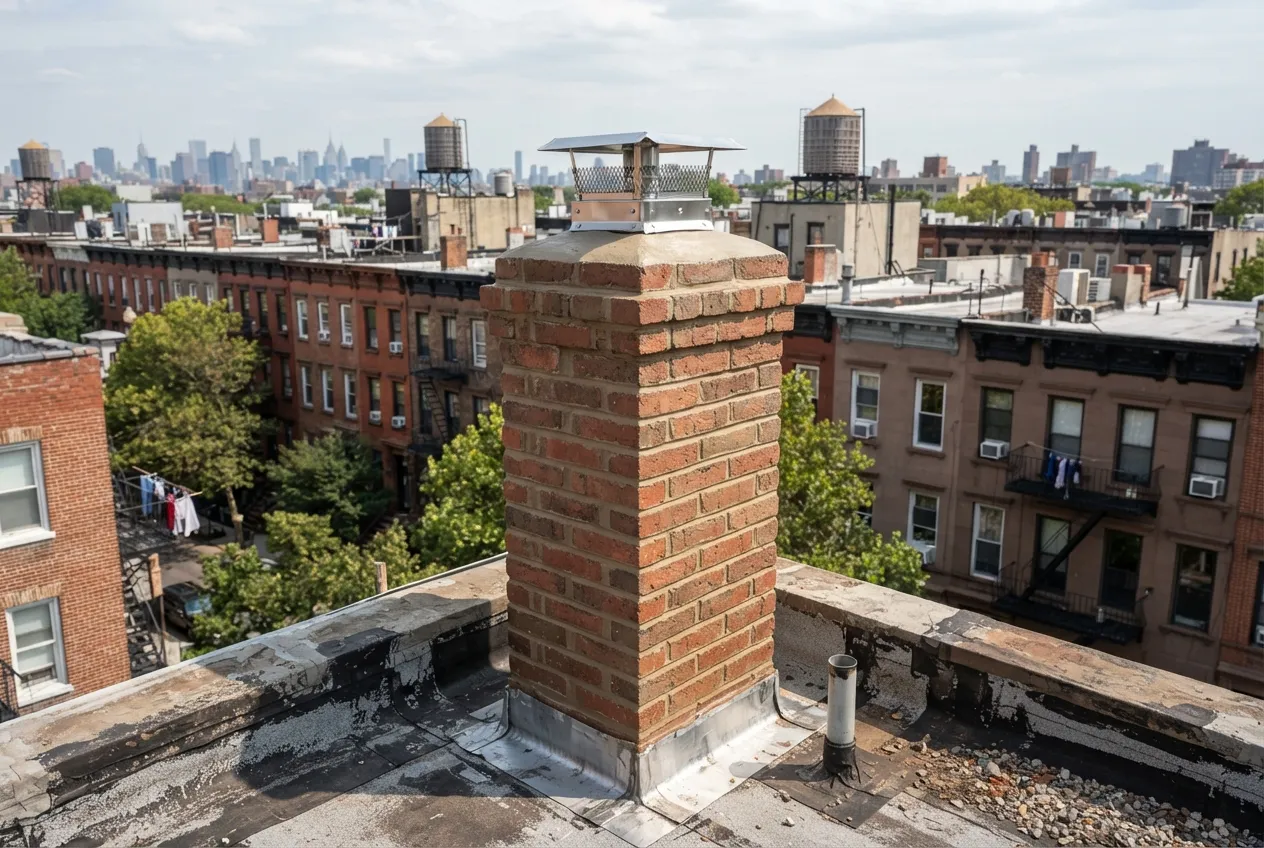
Water is the most common cause of chimney damage, and it rarely shows up all at once. Brick is porous. Rain, melting snow, and freeze-thaw cycles work into the masonry, the mortar joints, and the crown on top of the stack. Over a few seasons that moisture can crack bricks, loosen mortar, rust a damper, stain ceilings, and wet the inside of the flue. EliteFlue Chimney Services waterproofs chimneys on brownstones, row houses, and detached homes in Brooklyn and nearby neighborhoods. We find where water is getting in, repair the weak points, and apply a breathable water repellent so the brick sheds rain while trapped moisture can still escape. This page covers the signs to watch for, what the service includes, how our crew works, and what affects the cost.
Signs you need it
Most homeowners notice water damage from inside the house before they see it on the roof. If you spot any of the signs below, have the chimney looked at before the next stretch of wet or freezing weather. Small problems on a chimney usually grow, because each freeze widens the cracks that water has already found.
- Water in the firebox or puddles on the hearth after rain
- White, chalky staining on the brick (efflorescence), which means water is moving through the masonry and leaving salts behind
- Brick flakes, crumbled mortar, or debris in the firebox
- A strong smoky or creosote smell, especially on humid or rainy days, since damp deposits in the flue give off more odor
- Rust on the damper, firebox doors, or the chimney cap
- Water stains or peeling paint on the ceiling or wall next to the chimney
- Cracked or chipped chimney crown, or gaps in the mortar visible from the roof or street
What's included
Waterproofing only works if the chimney is sound underneath it. A sealant cannot bridge an open mortar joint or a split crown, so every job starts with an inspection and includes the prep work the masonry needs. If we find damage beyond the scope of waterproofing, we show you photos and explain your options before doing any extra work.
- Inspection of the exterior masonry, crown, cap, and flashing where the chimney meets the roof
- Camera inspection of the flue when we see signs of water inside, so we can check for cracked tiles or wet deposits
- Cleaning of the brick surface so the repellent can soak in evenly
- Sealing of hairline cracks and small mortar gaps before the repellent goes on
- Repair or sealing of the chimney crown to stop water from pooling and soaking in from the top
- Check of the chimney cap and recommendation for one if the flue is open to rain
- Application of a vapor-permeable water repellent to the exposed masonry
- Photos of the before and after condition and a plain explanation of what we found
How our crew works in your home and on the roof
Most waterproofing happens on the roof, but we often need to check the fireplace and flue from inside too. Before we touch anything indoors, we lay drop cloths from the door to the hearth and cover the fireplace opening. If we need to clear debris or flaking material from the firebox or smoke shelf, we use HEPA vacuums so dust stays out of your living space. When the flue needs a closer look, we run a camera up the chimney to see the liner and any water damage you can't see from the hearth. If buildup has to come out first, we use rotary brushes so the flue is clean before we evaluate it.
On the roof, we set up safe access, protect roofing materials around the chimney, and work only in dry weather with temperatures that allow the repellent to cure properly. We clean the brick, make small repairs, treat the crown, and apply the repellent in even coats. We pick up our own debris and leave the roof and the room the way we found them.
The standard we follow
The NFPA 211 standard calls for chimneys, fireplaces, and vents to be inspected once a year. Chimney professionals use three inspection levels. A Level 1 inspection covers a chimney when nothing about the system has changed. A Level 2 inspection applies when something does change, such as a new appliance or a switch in fuel, or when the home is sold. A Level 3 inspection is needed when a hidden hazard can only be reached by opening part of the chimney or building. Our certified technicians decide which level fits before recommending waterproofing.
Fuel type matters for water damage too. When a New York City building converts its boiler from oil to gas, the chimney has to be evaluated as part of the work, and a new liner is often needed because gas exhaust produces acidic condensate that can corrode a masonry flue. If your chimney vents a gas appliance, we check the flue for this kind of interior moisture damage, which exterior waterproofing alone won't fix.
What affects the price
Every chimney is different, so we quote after we've seen it. The main factors are the height of the chimney and how hard it is to reach the roof safely, the amount of exposed masonry to treat, and the condition of the brick, mortar, and crown. The fuel the chimney serves and the size and condition of the flue also matter, as does how much buildup has to be cleared before inspection. A camera inspection, crown rebuild, flashing repair, or new cap adds to the scope. We explain each item so you can see exactly what you are paying for.
How a visit works
When you contact us, we ask about what you've noticed, the age and type of your home, and what the chimney vents. We schedule a visit on a dry day. The technician inspects the chimney inside and out, shows you photos, and walks you through what needs to happen before waterproofing and what can wait. Once you approve the work, we make the repairs, apply the repellent, and clean up. Many owners prefer to book outside New York City's heat season, which runs from October 1 through May 31, so the heating system isn't interrupted. We can still work during those months when the weather allows.