The short answer
A chimney inspection checks your fireplace, stove or boiler flue from the firebox to the cap for cracks, creosote, blockages, water damage and venting problems. The NFPA 211 standard calls for a yearly inspection, and a more detailed inspection is needed when you change appliances or fuel, or when you buy or sell a home.
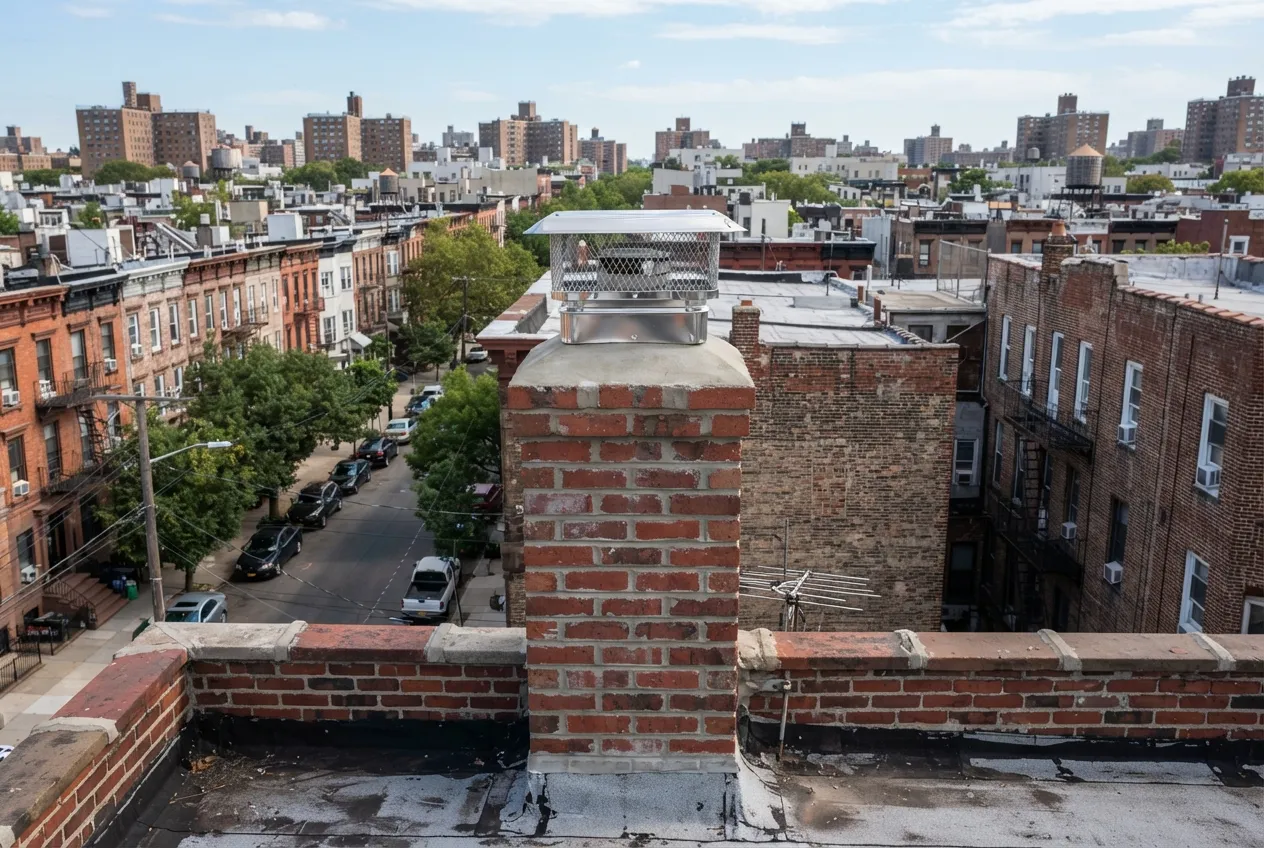
A chimney inspection tells you whether your fireplace, wood stove or boiler flue can safely carry smoke and exhaust out of your home. In Brooklyn, many chimneys serve older brick rowhouses and brownstones. Years of freeze-thaw cycles, settling and heavy heating-season use cause damage that is hard to see from the living room. Our certified technicians look at the whole system, from the firebox or appliance connection up to the crown and cap, and explain what they find in plain terms. You may use your fireplace every winter weekend, rely on a gas boiler from fall through spring, or have just bought a home with a chimney you know nothing about. In each case, an inspection gives you a clear picture before you light anything.
Signs You Need a Chimney Inspection
Some chimney problems are easy to notice. If you see or smell any of the following, schedule an inspection before your next fire or before the heating season starts.
Even without warning signs, a yearly inspection is the norm. Many hazards show no symptoms until something goes wrong, including cracked flue tiles, gaps in a liner and creosote glazed onto the inside of the flue.
- A smoky or campfire smell in the room, especially on humid days or when the fireplace isn't in use
- Smoke spilling back into the room, or a fire that is hard to start and keep going
- Soot chunks or flakes of brick and mortar collecting in the firebox
- White, chalky staining on the outside brick, which means moisture is moving through the masonry
- Scratching, chirping or rustling sounds inside the chimney
- Water, rust or damp spots in the firebox or around the damper
What a Chimney Inspection Includes
We inspect every part of the system we can reach for the inspection level your situation calls for. You get findings you can act on, not just a pass or fail.
- Firebox, smoke chamber and damper: condition and operation
- Flue liner: cracks, gaps, missing mortar and creosote buildup
- Connection and venting for stoves, inserts and boilers
- Clearances to nearby wood framing and trim, where visible
- Chimney crown, cap, spark screen and flashing on the roof
- Exterior brick and mortar joints
- Signs of water entry, animal nesting or blockage
- Camera footage of the flue when the job calls for it
- A written summary with photos and recommended next steps
How Our Crew Works Inside Your Home and on the Roof
Inside, technicians lay drop cloths from the entry to the hearth and seal off the fireplace opening before any work starts. HEPA vacuums run during the visit to capture fine soot so it doesn't drift into the room. Sometimes the flue has to be cleaned before it can be inspected properly. In that case, we use rotary brushes sized to your liner, which scrub the walls without chipping them. For a closer look at the liner, we run a camera up the flue and review the images with you on screen.
On the roof, the crew checks access first and uses ladders and safety gear suited to the building. Many Brooklyn roofs are flat and reached through a hatch or bulkhead. Others need ladder access from the street or yard. From the top, we inspect the crown, cap, flashing and upper courses of brick, which take the most weather. We take photos so you can see the same conditions we do without climbing up yourself.
The Standard We Follow: NFPA 211 and the Three Inspection Levels
Our inspections follow NFPA 211, the national standard that calls for chimneys, fireplaces and vents to be inspected once a year. Chimney professionals use three inspection levels. The right one depends on your situation:
Fuel conversions need special attention in New York City. When a building converts its boiler from oil to gas, the chimney has to be evaluated as part of the work. A new liner is often needed, because gas exhaust produces acidic condensate that can corrode a masonry flue. If your building has converted or plans to, an inspection shows whether the existing flue is suitable.
- Level 1: For a system that hasn't changed and is used the same way as before. We check the readily accessible parts of the chimney and appliance.
- Level 2: For when something changes, such as a new stove or insert or a switch from oil to gas, or when the home is being sold. This is a more detailed look, usually including a camera run through the flue.
- Level 3: For when a hidden hazard is suspected and the only way to reach it is to open part of the chimney or building.
What Affects the Price
Every chimney is different, so we give you a quote once we understand your home. The main factors are listed below.
We explain the scope before work starts. You decide on any repairs after you have seen the findings.
- Chimney height and how the crew reaches the roof
- Fuel type: wood, gas or oil
- Flue size, shape and current condition
- How much soot or creosote has to be cleared to see the liner
- Whether a camera inspection is needed
- Whether repairs are recommended (these are quoted separately)
How a Visit Works
When you book, we ask a few questions about your home: what kind of fireplace or appliance you have, what fuel it uses, when it was last serviced and whether you've noticed any of the signs above. Your answers help us bring the right equipment and choose the right inspection level. If you burn wood, let the fireplace go cold for at least a day before the visit.
On the day of the visit, the crew arrives, protects the work area and works through the checklist inside and on the roof. Afterward, the technician walks you through the photos or camera footage, explains what is in good shape and what isn't, and gives you a written summary. New York City's heat season runs from October 1 through May 31. Booking in late summer or early fall leaves time to fix any problems before your heat needs to run every day.
Chimney Inspection by city
- Chimney Inspection in Fort Greene
- Chimney Inspection in Prospect Heights
- Chimney Inspection in Park Slope
- Chimney Inspection in Downtown Brooklyn
- Chimney Inspection in DUMBO
- Chimney Inspection in Boerum Hill
- Chimney Inspection in Clinton Hill
- Chimney Inspection in Carroll Gardens
- Chimney Inspection in Cobble Hill
- Chimney Inspection in Gowanus
- Chimney Inspection in Red Hook
- Chimney Inspection in Brooklyn Heights