
The short answer
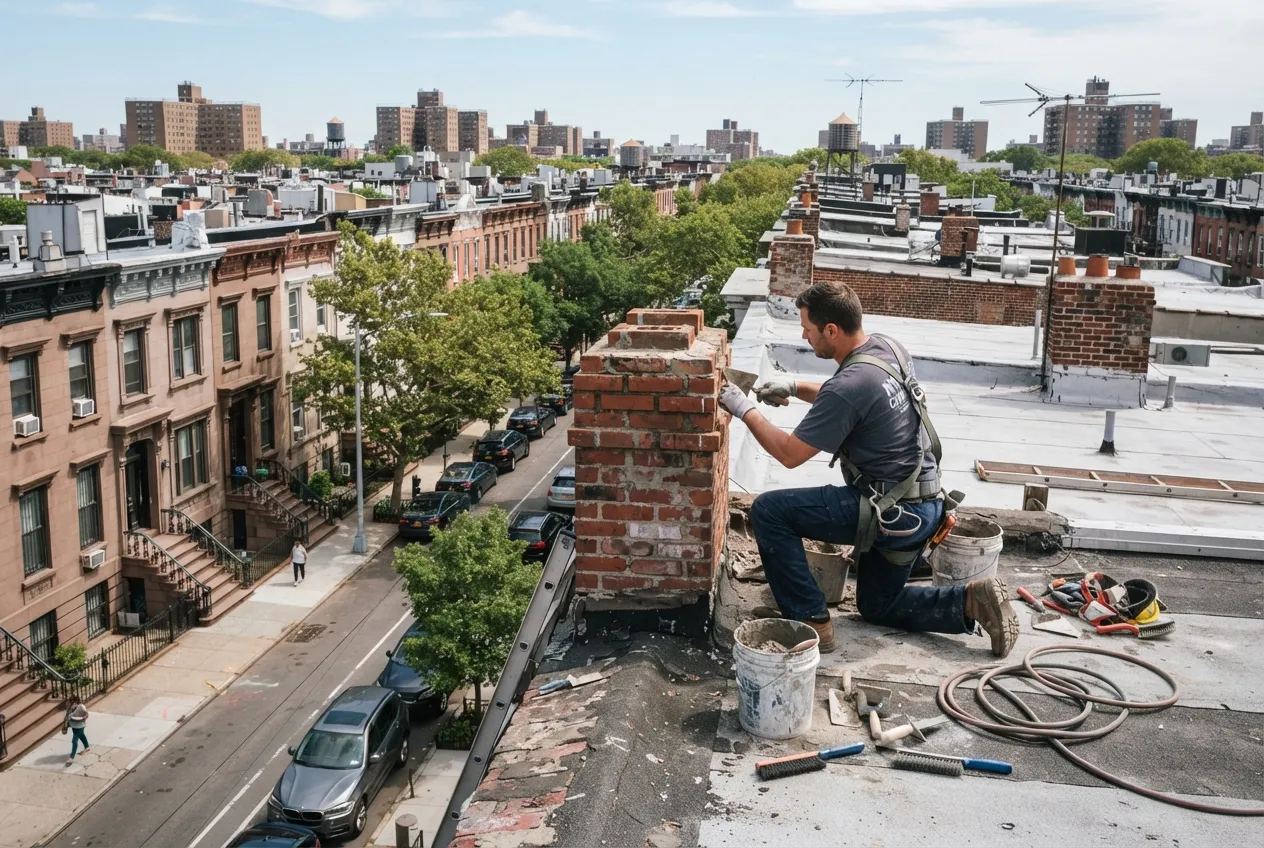
Chimney repair fixes the parts that let water, smoke or animals in, including mortar, brick, crowns, caps, flashing, liners and dampers. We inspect first to find the real cause, show you photos or camera footage, and give you a written scope before any work begins.
Brick chimneys take a beating in Brooklyn. Freeze-thaw cycles, wind-driven rain and years of heating exhaust slowly loosen mortar, crack crowns and wear out flue liners. Small problems tend to stay hidden until water shows up on a ceiling or a fireplace starts to smoke. EliteFlue Chimney Services repairs masonry chimneys, flues, caps and flashing on rowhouses, brownstones, detached homes and small multifamily buildings in Brooklyn and nearby neighborhoods. Our certified technicians start by finding the cause and showing you what they found. Then they fix what actually needs fixing.
Signs you need chimney repair
Most chimney damage starts slowly. Homeowners usually notice one of these signs before they call:
None of these signs tells you on its own how serious the problem is. Water staining can come from a failed cap, worn flashing or porous brick, and each one calls for a different fix. That is why we inspect before we recommend any repair.
- Water in the firebox, or damp stains on the wall or ceiling next to the chimney, often after a heavy rain
- White, chalky staining on the brick, which usually means water is moving through the masonry and leaving salts behind
- Brick flakes, mortar sand or pieces of flue tile collecting in the firebox or at the base of a stove pipe
- Poor draft: smoke rolling into the room, a fire that is hard to start, or a boiler or furnace that seems to struggle
- A strong smoke or creosote smell, especially on humid days or when the air conditioning runs
- Animal noises, nesting material or droppings, which point to a missing or damaged chimney cap
- Loose or missing bricks, a cracked crown, or rusted, lifted flashing you can see from the street or a neighboring roof
What's included in a chimney repair
Every repair job follows the same basic checklist, whatever the size of the work.
If we find a problem outside the original job, we stop and talk with you before adding any work.
- An inspection of the chimney, the flue and the fireplace or appliance connection to confirm the cause of the problem
- Photos or camera footage of the damage so you can see what we see
- A written scope that explains each repair in plain language before work begins
- Protection for floors, furniture and the area around the fireplace or appliance
- The repair itself, which may include repointing mortar joints, rebuilding a crown, replacing loose brick, installing a cap or resetting flashing
- Flue relining when the existing liner is cracked, missing or not suited to the fuel
- Damper, firebox and smoke chamber repairs when the trouble is inside
- A final check of draft and water paths, followed by a full cleanup
How our crew works inside your home and on the roof
Inside your home, the crew lays drop cloths from the door to the work area. Before anything is disturbed, they seal the fireplace opening or appliance connection with plastic. HEPA vacuums run during the work to capture soot and masonry dust. Rotary brushes clear the flue so the liner and inner walls can be seen clearly. When the inside of the flue matters to the diagnosis, a technician runs a camera through it to look for cracked tiles, gaps in mortar joints and separated liner sections.
On the roof, the crew sets up safe access first, using ladders or roof anchors as the building requires, and protects the roofing around the chimney. They check the crown, cap, brick, mortar and flashing up close. They also keep debris contained so it does not fall into gutters, yards or onto a neighbor's roof. Many Brooklyn homes share walls and rooflines, so we watch out for adjoining chimneys and roofs while we work.
The standard we follow
We follow NFPA 211, the national standard for chimneys, fireplaces and vents. It calls for these systems to be inspected once a year. Chimney professionals use three inspection levels. A Level 1 inspection fits when nothing about the system has changed. A Level 2 inspection is called for when the system changes, such as a new appliance or a switch of fuel, or when the home is sold. A Level 3 inspection applies when a hidden hazard can only be reached by opening part of the chimney or the building.
Fuel changes need special attention. When a New York City building converts its boiler from oil to gas, the chimney has to be evaluated as part of the work. A new liner is often needed because gas exhaust produces acidic condensate that can corrode a masonry flue. If you are planning a conversion, we can evaluate the chimney and reline it if needed.
What affects the price
Repair pricing depends on the building and the damage, so we quote after an inspection rather than over the phone. The main factors are:
- Chimney height and roof access, including how steep the roof is and whether it can be reached from inside
- Fuel type, since gas, oil and wood each place different demands on the flue and liner
- Flue size and condition, including whether the liner can be repaired or needs replacing
- How much buildup is in the flue, since soot or creosote has to be cleared before inspection or relining
- Whether a camera inspection is needed to find the problem
- How much masonry, crown, cap or flashing work the repair involves
- Materials, such as the type of liner or brick that matches an older facade
How a repair visit works
It starts with your request. We ask about the symptoms, the fuel you burn and the age of the system, and then we set a time. On the day of the visit, the technician arrives, protects the work area and inspects the chimney from inside and from the roof.
Next, the technician explains what they found and shows you photos or camera footage. You also get a written scope with pricing for the repairs. Small repairs, such as replacing a cap, can often be done the same day. Larger masonry or relining jobs are scheduled as a separate visit.
Timing matters. New York City's heat season runs from October 1 through May 31. During that time, building owners must keep apartments heated to the city's minimum temperatures. If you own a multifamily building, booking chimney repairs before October helps you avoid having a heating system down when tenants need it most.
Chimney Repair by city
- Chimney Repair in Fort Greene
- Chimney Repair in Prospect Heights
- Chimney Repair in Park Slope
- Chimney Repair in Downtown Brooklyn
- Chimney Repair in DUMBO
- Chimney Repair in Boerum Hill
- Chimney Repair in Clinton Hill
- Chimney Repair in Carroll Gardens
- Chimney Repair in Cobble Hill
- Chimney Repair in Gowanus
- Chimney Repair in Red Hook
- Chimney Repair in Brooklyn Heights