
The short answer
EliteFlue Chimney Services repairs chimneys in Red Hook, Brooklyn, including masonry, crowns, flashing, caps, dampers and flue liners. Our certified technicians inspect first, show you what they find and explain which repairs matter most before any work begins.
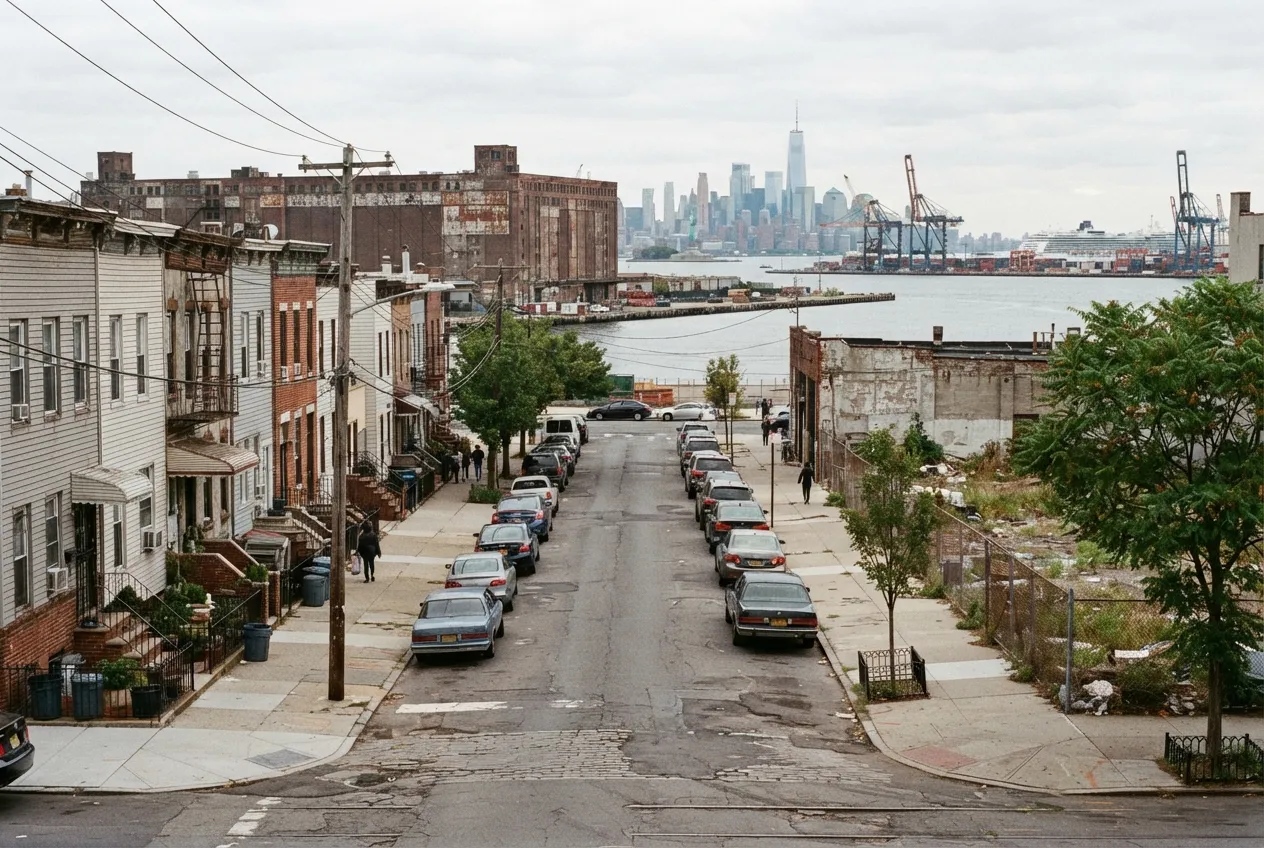
Chimneys in Red Hook take a beating. Many homes here are brick rowhouses and older attached houses close to the water, where wind, salt air and repeated freeze-thaw cycles wear down mortar, crowns and flashing year after year. EliteFlue Chimney Services repairs chimneys across Red Hook (ZIP 11231) from our office in Fort Greene. Our certified technicians find the actual cause of a problem before recommending any work. Whether you have a leak in a top-floor ceiling, loose bricks at the roofline or a flue that needs a new liner, we explain what we see and what it will take to fix it.
Why Chimneys in Red Hook Need Repair
Most chimney damage starts at the top. The crown is the concrete or mortar cap over the masonry. When it cracks, water gets into the brick, and each winter that water freezes and expands. Over time the joints open up, bricks spall (the face flakes off) and moisture travels down into the house. In an exposed, low-lying neighborhood near the harbor, wind-driven rain speeds up this process compared with a sheltered street.
Rowhouses and attached homes add their own issues. Chimneys often sit along a party wall or close to a neighbor's roof, so flashing and roof joints are common leak points. Older buildings may also have unlined or partly lined clay flues that were built for coal or oil, not for today's appliances. Watch for these signs:
- Water stains on ceilings or walls next to the chimney
- Brick flakes, mortar sand or debris in the fireplace or at the base of the chimney
- White staining (efflorescence) on the outside brick
- A leaning, cracked or visibly loose chimney stack
- Rust on the damper, firebox or cleanout door
- Smoke or odors coming back into the room
Chimney Repairs We Handle in Red Hook
We repair the masonry, the parts that keep water out and the flue that carries exhaust. Typical jobs include:
For older brick, we match the new mortar to the existing work as closely as we can. Mortar that is harder than the surrounding brick can trap moisture and speed up damage.
- Repointing: grinding out failed mortar joints and refilling them with compatible mortar
- Rebuilding the top of a chimney when bricks are loose or badly spalled
- Crown repair or replacement to shed water away from the stack
- Chimney caps to keep out rain, birds and debris
- Flashing repair where the chimney meets the roof
- Firebox and smoke chamber repairs for wood-burning fireplaces
- Damper repair or replacement
- Relining flues with stainless steel or other suitable liners
Liners and Oil-to-Gas Conversions
Many Red Hook buildings still heat with oil or have recently switched to gas. In New York City, when a building converts its boiler from oil to gas, the chimney has to be evaluated as part of the work. A new liner is often needed, because gas exhaust produces acidic condensate that can corrode a masonry flue.
We inspect the existing flue, check its size against the new appliance and recommend a liner when one is needed. A properly sized liner helps the appliance vent correctly and protects the brick from the inside.
How a Chimney Repair Visit Works
Every repair starts with an inspection. The NFPA 211 standard calls for chimneys, fireplaces and vents to be inspected once a year, and it describes three inspection levels:
After the inspection, we walk you through photos of what we found. We explain which repairs are urgent and which can wait, and we give you a written scope of work before anything starts.
- Level 1, when nothing about the system has changed
- Level 2, when the system changes, such as a new appliance or a switch of fuel, or when the home is sold
- Level 3, when a hidden hazard can only be reached by opening part of the chimney or building
Plan Repairs Around the Heat Season
New York City's heat season runs from October 1 through May 31. During that time, building owners must keep apartments heated to the city's minimum temperatures. If you own a building with tenants, a chimney or liner problem in the middle of winter can put that requirement at risk.
Late spring and summer are the easiest times to schedule masonry and liner work, and mortar cures better in mild weather. If you notice a problem in winter, call early so we can assess it and keep your heating running safely until full repairs can be done.
Besides Red Hook, we also serve nearby Carroll Gardens, Cobble Hill, Gowanus, Park Slope and Brooklyn Heights.
More services in Red Hook
- Chimney Sweep in Red Hook
- Chimney Inspection in Red Hook
- Air Duct Cleaning in Red Hook
- Chimney Liner Installation in Red Hook