
The short answer
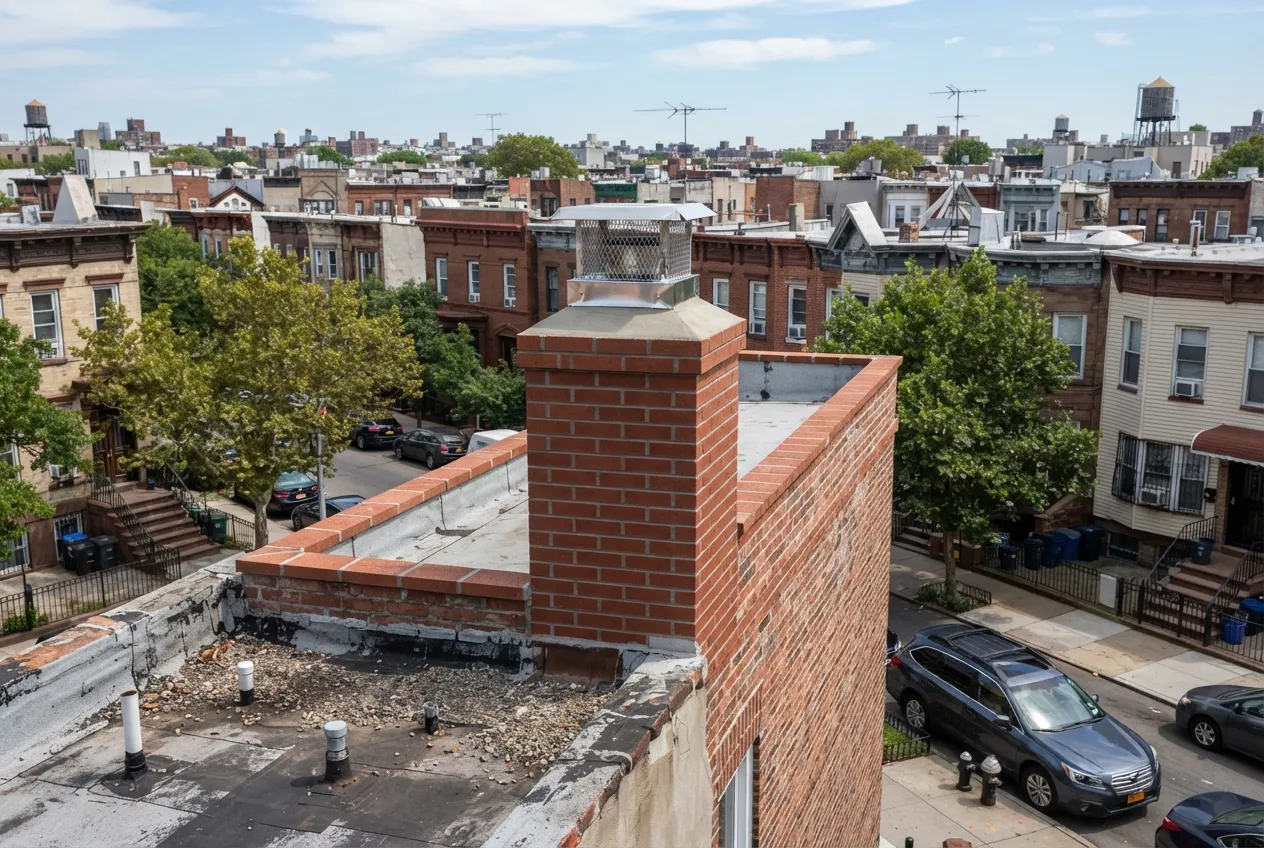
You likely need a chimney rebuild when bricks are crumbling, mortar is washing out, the stack is leaning or water keeps reaching the firebox. We inspect the chimney, take down the damaged masonry and rebuild it with new brick, a new crown, flashing and a cap. The cost depends on height, roof access, fuel type, flue condition and how much needs to come down.
A chimney that is leaning, shedding brick or letting water into the house usually can't be fixed with a patch. Chimney rebuilding means taking down the damaged section of masonry, often from the roofline up, and laying it back with new brick, fresh mortar and a properly built crown. EliteFlue Chimney Services rebuilds chimneys on rowhouses, brownstones and detached homes across Brooklyn and nearby neighborhoods. Below you'll find the warning signs that point to a rebuild, what the job includes, how our certified technicians protect your home while they work, and what shapes the cost of the project.
Signs you need it
Brick chimneys take a beating from freeze-thaw cycles, wind-driven rain and, in older buildings, years of flue gases moving through unlined or worn masonry. Damage usually shows up slowly. Some of it is visible from the street, and some shows up inside the fireplace. If you notice any of the following, have the chimney looked at before the next heating season.
One sign on its own doesn't always mean a full rebuild. Sometimes repointing or a new crown is enough. The inspection tells us how deep the damage goes.
- Bricks that are cracked, spalling or flaking, with chips and brick flakes landing in the firebox
- Mortar joints that are recessed, crumbling or washing out
- White staining on the brick, a sign that water is moving through the masonry and carrying salts to the surface
- Water in the firebox, or damp stains on ceilings and walls next to the chimney
- A chimney that leans, has gaps at the roofline or has loose bricks near the top
- Poor draft or a smoke or creosote smell in the room, which can point to a damaged flue or a blockage from fallen masonry
- A cracked or missing crown, or flashing that has pulled away from the brick
What's included in a chimney rebuild
Every rebuild is scoped to the condition of your chimney. A typical job covers the following:
- Inspection of the chimney and flue, including a camera inspection of the flue interior
- A written scope showing which section will be taken down and rebuilt
- Careful removal of damaged brick and mortar down to sound masonry
- Rebuilding with new brick and mortar chosen to match the existing structure as closely as practical
- A new sloped crown that sheds water away from the flue
- New flashing where the chimney meets the roof
- A chimney cap to keep out rain, debris and animals
- Flue cleaning and, where needed, relining or replacing flue tiles
- Debris removal and cleanup of the roof and work areas
- A final walkthrough with photos of the finished work
How our crew works inside your home and on the roof
Most rebuilding happens outside, but the fireplace and any appliance connections are inside, so we treat the interior as part of the job site. Before anyone touches the flue, the crew lays drop cloths from the door to the fireplace and seals the opening so dust and debris stay contained. HEPA vacuums run during cleaning to capture soot and fine dust. Rotary brushes clear creosote and loose debris from the flue. A camera lets us see the full length of the flue instead of guessing from the top and bottom.
On the roof, the crew sets up safe access, protects the roofing around the chimney and lowers old brick in a controlled way instead of tossing it. Debris is bagged and removed. On attached rowhouses, where chimneys often sit close to a neighbor's roof, we pay attention to shared roof lines and keep the work area contained. At the end of each workday, open masonry is covered so an overnight storm doesn't send water into the house.
The standards we follow
The NFPA 211 standard calls for chimneys, fireplaces and vents to be inspected once a year. Chimney professionals use three inspection levels. Level 1 applies when nothing about the system has changed. Level 2 applies when the system changes, such as a new appliance or a switch of fuel, or when the home is sold. Level 3 applies when a hidden hazard has to be reached by opening part of the chimney or building.
A rebuild usually starts with at least a Level 2 inspection. In some cases a Level 3 inspection is needed to reach damage hidden behind walls or inside the chimney structure. Once the rebuild is finished, the chimney should go back on a yearly inspection schedule.
If your building is converting its boiler from oil to gas, New York City requires the chimney to be evaluated as part of that work. A new liner is often needed, because gas exhaust produces acidic condensate that can corrode a masonry flue. When a rebuild and a fuel conversion fall around the same time, it makes sense to plan them together.
What affects the price
We don't quote a rebuild until we've seen the chimney, because costs depend on conditions that vary from one home to the next. The main factors are:
You'll get a written estimate that explains each part of the scope before any work begins.
- Chimney height and how difficult the roof is to reach and work on
- How much of the chimney needs to come down, from the top few courses to the full stack above the roofline
- The fuel the chimney serves, such as wood, oil or gas, which affects liner requirements
- Flue size and condition, including whether flue tiles are cracked or missing
- How much creosote or soot buildup has to be cleaned before work begins
- Whether a camera inspection, a Level 3 inspection or added repairs such as relining are needed
- How much effort it takes to match brick and mortar on an older facade
How a visit works
It starts with an inspection visit. A technician checks the chimney from the roof and from inside, runs a camera through the flue and photographs what they find. You'll get a plain explanation of what is damaged, what can be repaired and what needs rebuilding.
Once you approve the scope, we schedule the work. Masonry work depends on the weather, so dry stretches are best. Many owners plan ahead so the chimney is ready before New York City's heat season starts. That timing matters most for building owners, who must keep apartments heated to the city's minimum temperatures from October 1 through May 31.
On work days, the crew arrives, protects the interior and roof, completes the rebuild and cleans up. When the job is finished, we walk you through the results and show you photos of the new masonry, crown, flashing and cap.