
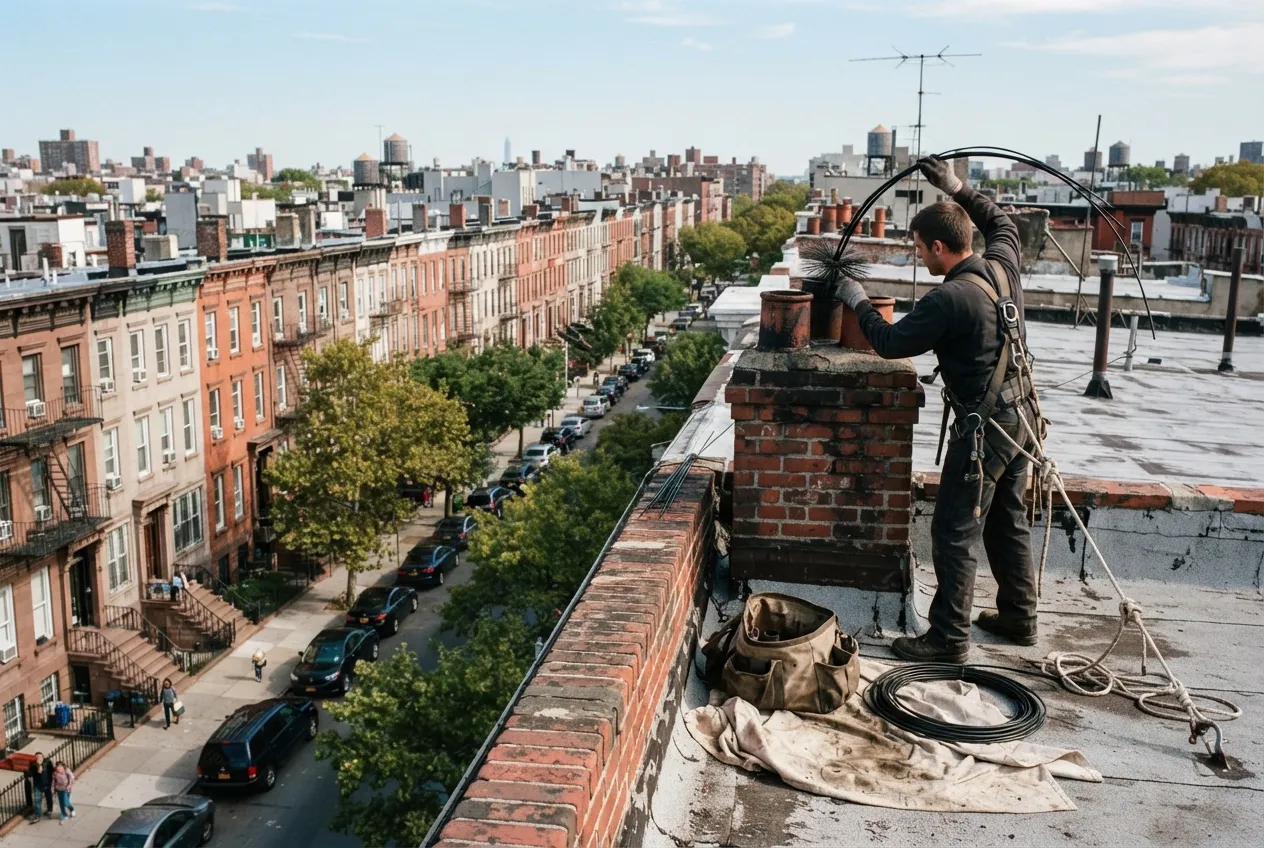
What Chimney and Air Duct Work Costs, and Why
Serving Brooklyn and nearby cities.
- Diagnosis before any repair
- Written price up front
- Written price before we start
Homeowners in Brooklyn often ask for a price over the phone before anyone has seen the chimney or the ductwork. We understand why. But two jobs with the same name can involve very different amounts of work. This page explains what drives the cost of each service we offer, from a routine sweep to a full rebuild, so you know what to expect and can compare quotes fairly. We don't publish a price list. We look at the job and give you a written price before any work starts.
How We Give You a Price
Before we quote, a technician looks at the system in person. For a chimney, that means checking the firebox, damper, smoke chamber and flue from below. When it's safe to get on the roof, it also means checking the crown, cap and masonry. For ducts and dryer vents, we count the supply vents and returns, find where the dryer vent exits and check how much buildup is inside.
You then get a written price that lists the work, the parts and the materials. If we find something during the job that changes the scope, we stop and talk with you before doing anything extra. You decide what gets done and when.
What Affects the Cost of a Chimney Sweep and Inspection
A sweep removes soot and creosote from the flue and smoke chamber. How long it takes depends mostly on how the chimney is built and what's inside it.
The NFPA 211 standard calls for chimneys, fireplaces and vents to be inspected once a year. A Level 1 inspection is a visual check of the accessible parts of the chimney. It fits when nothing about the system has changed. A Level 2 inspection adds a camera run through the full length of the flue. It's called for when the system changes, such as a new appliance or a switch of fuel, or when the home is sold. It takes more time and equipment, so it costs more than a Level 1. A Level 3 inspection opens part of the chimney or building to reach a hidden hazard, and it's only needed when there's reason to suspect one.
- Height and roof access: a tall chimney on a steep or multi-story roof takes more setup and safety equipment than a short one on a flat roof.
- Fuel type: wood-burning fireplaces build up creosote, while oil and gas appliances leave soot and scale that call for different tools.
- Flue size and condition: an oversized, unlined or damaged flue takes longer to clean thoroughly than a smooth, lined one.
- Amount of buildup: light soot comes out quickly. Hardened, glazed creosote may need several passes or a treatment before it can be removed.
Repairs, Liners and Rebuilding
Repair pricing depends on what's damaged, how much of it, and how hard it is to reach. Repointing a few mortar joints is a very different job from rebuilding a chimney above the roofline. Materials, roof protection and the number of days on site all factor in.
Many liner jobs in Brooklyn come from boiler conversions. When a building switches its boiler from oil to gas, the chimney has to be evaluated as part of the work. A new liner is often needed because gas exhaust produces acidic condensate that can corrode a masonry flue. Having the chimney checked early keeps the liner from becoming a surprise.
- Chimney repair and rebuilding: how much brick and mortar is damaged, whether the crown needs replacing, and how much of the stack has to come down.
- Chimney liner installation: the height and shape of the flue, the liner material the appliance requires, and whether the old flue has to be cleaned out or enlarged first.
- Chimney cap and chase cover: the size and shape of the flue or chase top, the number of flues being covered, and the metal used.
- Chimney waterproofing: how much masonry is exposed, and any repairs that have to be made before the sealant goes on.
- Fireplace and damper repair: whether the damper can be fixed or has to be replaced, and the condition of the firebox and smoke chamber.
Air Duct and Dryer Vent Cleaning
The cost of duct cleaning follows the size and layout of your system. It isn't a flat per-house figure.
The U.S. EPA advises cleaning air ducts when there is substantial visible mold growth, vermin, or excessive dust and debris. It also says duct cleaning hasn't been shown to prevent health problems, so we won't sell it to you on that basis. If your ducts don't need cleaning, we'll tell you.
Dryer vent cleaning is usually a smaller job. Its price depends on the length of the vent run, the number of turns, and whether the vent exits through a wall or the roof. According to the U.S. Fire Administration, failure to clean is the leading factor contributing to clothes dryer fires in homes. A long or crushed vent is worth fixing even if the job takes longer.
- The number of supply vents and returns, and how many separate systems the home has.
- Duct type and condition, since rigid metal, flex duct and duct board are each cleaned differently.
- The amount of dust and debris, and any visible mold or signs of pests.
- How easy it is to reach the air handler and the attic or basement runs.
Apartments, Co-ops and Row Houses
Access shapes the price of many Brooklyn jobs. In apartment buildings and co-ops, we may need to coordinate with the super or managing agent, reserve an elevator, protect hallways, or reach the roof through a bulkhead. Some boards require paperwork before work can start. Row houses often share walls and rooflines with neighbors, which affects how we set up.
Timing matters too. During New York City's heat season, building owners must keep apartments heated to the city's minimum temperatures. Boiler chimney work during those months is planned to keep downtime short.
Why Very Cheap Duct Cleaning Offers Usually Cost More
You've probably seen ads for whole-house duct cleaning at a price that seems too low to cover a crew's time. It usually is. These offers often cover only a quick pass at a few vents. Once the crew is inside, the bill grows with charges for extra vents, returns, main trunk lines, sanitizers or mold treatments.
The EPA warns consumers to research the process before responding to very cheap advertised offers, and to be careful with chemical treatments. We look first, count what's there and put the full scope in writing. If we suggest a treatment, we explain why, and you can say no.
FAQ
Common questions
Can you give me a price over the phone?
We can explain what affects the cost, but we give a written price only after a technician sees the chimney, ducts or dryer vent. The work varies too much from home to home for a reliable phone quote.
Why does a Level 2 inspection cost more than a Level 1?
A Level 1 inspection is a visual check of the accessible parts of the chimney. A Level 2 inspection adds a camera run through the full flue, which takes more time and equipment. It's called for when you change the system, such as adding a new appliance or switching fuel, or when the home is sold.
Is sweeping a gas or oil chimney priced differently from a wood fireplace?
It can be. Wood fires leave creosote, while oil and gas leave soot and scale that need different tools. The flue's size, height and condition usually matter as much as the fuel.
Do I really need my air ducts cleaned?
Not always. The EPA advises cleaning when there's substantial visible mold growth, vermin, or excessive dust and debris. If we don't see those signs, we'll tell you.
What happens if you find more work once the job starts?
We stop, show you what we found, and explain the options. Nothing beyond the written scope gets done until you approve it.
Why can work in an apartment or co-op take more time?
Buildings often require coordination with the super or managing agent, elevator reservations, hallway protection, roof access through a bulkhead, or board paperwork. Each of these adds time, and that time is reflected in the written price.
Schedule a Chimney or Vent Inspection
Tell us what you are noticing and what kind of building you live in. We will inspect, show you what we find, and give you a written price before any work begins.