
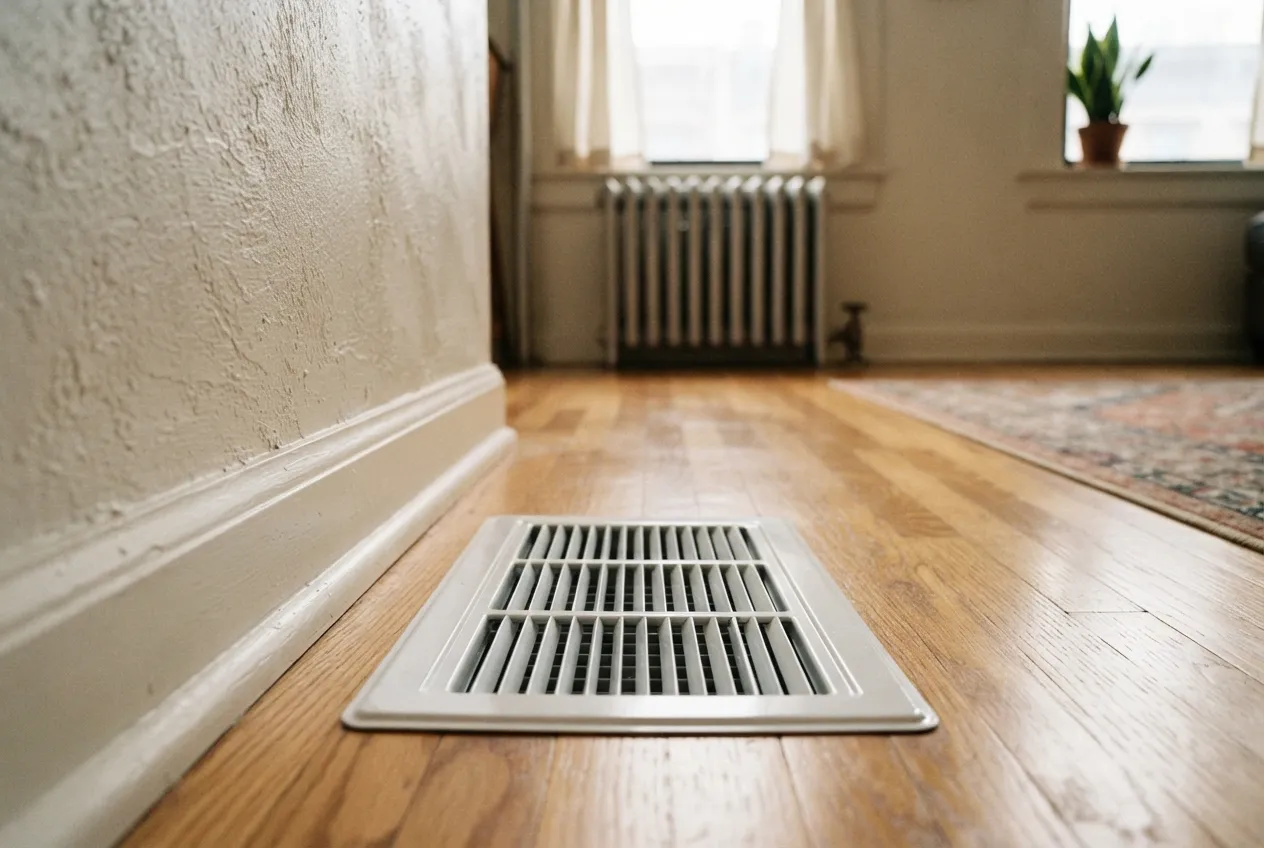
The short answer
Your ducts need cleaning when you can see real problems: dust blowing from vents, leftover renovation debris, pests, visible mold growth or musty odors. EliteFlue's certified technicians clean supply and return ducts and the air handler with HEPA negative-air equipment and rotary brushes. We follow U.S. EPA guidance and make no health promises.
Forced-air heating and cooling systems move the same air through your home again and again. Over time, the ductwork collects dust, pet hair and construction debris, and sometimes things that shouldn't be there at all, like nesting material or droppings. Many Brooklyn homes are older rowhouses, brownstones and converted multi-family buildings, so ducts often run through tight chases, basements and ceilings that have been renovated more than once. EliteFlue's certified technicians clean supply and return ducts, registers, and the parts of the air handler that dust passes through. We use HEPA-filtered negative-air equipment and rotary brushes. We focus on problems you can see and check: visible dust and debris, renovation dust, pests, odors and airflow. We don't make health claims about duct cleaning, and if your ducts don't need it, we'll tell you.
Signs you need it
Ducts don't need cleaning just because time has passed. The reasons to schedule are things you can actually notice around your registers and when the system runs. If you're seeing one or more of these, it's worth having a technician take a look.
- Dust blowing from supply vents when the heat or air conditioning kicks on
- Gray buildup on register grilles that comes back within days of wiping
- Drywall dust, plaster or sawdust left behind after a renovation
- Scratching, rustling or other animal noises in the ductwork, or droppings near vents
- Musty or stale odors when the system runs
- Substantial visible mold growth on duct surfaces or inside the air handler
- Weak airflow in some rooms even with a clean filter
- Insulation bits, debris or nesting material visible behind register covers
What's included
Every air duct cleaning covers the full path air travels through your system, not just the registers you can reach from the room. Here is what a standard visit includes:
- An inspection of accessible supply and return ducts before work begins, with a camera where ducts can't be seen directly
- Removal and cleaning of register covers and return grilles
- Agitation of duct interiors with rotary brushes sized to each run
- Negative-pressure HEPA vacuum collection connected at the main trunk line
- Cleaning of the blower compartment and accessible air handler surfaces
- Removal of loose debris, renovation dust and nesting material
- A filter check, with replacement using a filter you supply or approve
- Before-and-after camera images where access allows
- A plain-language list of anything that needs repair, such as disconnected, crushed or leaking duct runs
How our crew works in your home and on the roof
Inside, we lay drop cloths from your entry to each work area and cover furniture and floors near open registers. We connect a HEPA-filtered negative-air vacuum to the main trunk line. That way, dust loosened inside the ducts is pulled toward the machine instead of being pushed out into your rooms. Each branch is then worked with a rotary brush on a flexible cable, one register at a time, while the vacuum keeps the system under suction.
Older Brooklyn homes often have duct runs with tight bends, patched joints or sections added during past renovations. Where we can't see inside a run, we use a camera to check for buildup, blockages, pest activity and damage, both before and after cleaning. If a run is disconnected or crushed, we show you what we found rather than just describing it.
Some homes have a rooftop air handler or package unit, or duct runs reached through an attic or roof hatch. In those cases, a technician goes up with proper ladders and fall protection, opens the unit's service panels, and cleans the blower and the accessible duct connections. Before leaving the roof, we close and secure every panel and make sure any opening we used is left weather-tight.
The guidance we follow
Chimneys and vents have a yearly inspection standard in NFPA 211, but there is no matching yearly schedule for residential air ducts. Instead, we follow the U.S. EPA's guidance. The EPA advises cleaning air ducts when there is substantial visible mold growth, vermin, or excessive dust and debris. It also says duct cleaning has not been shown to prevent health problems, so we don't promise any.
The EPA warns consumers to research the process before responding to very cheap advertised offers, and to be careful with chemical treatments. We don't add sanitizers or sealants as a routine upsell. If a treatment ever makes sense for your situation, we'll explain what it is and why, and the decision is yours.
What affects the price
Every home is different, so we quote after we understand your system. These are the main factors that change the scope of the job:
- The size of the home and the number of supply and return registers
- Access to the equipment: basement, attic, ceiling chases, building height, and whether we need roof access for a rooftop unit
- The type of system, such as a furnace, central air, or a combined heating and cooling unit
- Duct material and condition, including older sheet metal, flexible duct, or runs that were patched during past work
- How much buildup there is, including heavy renovation dust or pest debris
- Whether a camera inspection is needed to reach hidden runs
- Any repairs, such as reconnecting or sealing duct sections
How a visit works
When you book, we ask about your system, the age of the home, recent renovations, and what you've noticed, such as dust, odors, noises or weak rooms. That helps us bring the right brushes, hoses and camera equipment.
On arrival, the technicians walk through the home with you, find the air handler and the registers, and point out anything that could affect access. We shut the system off, protect your floors and furniture, set up the negative-air vacuum, and clean each run. Afterward, we reinstall the registers, restart the system, and check airflow at the vents with you. Then we review the before-and-after images and any repair notes.
Timing matters for heat. In New York City, heat season runs from October 1 through May 31, and building owners must keep apartments heated to the city's minimum temperatures during that time. If you own a multi-family building, we plan the work so the system is off for as short a time as possible.
Air Duct Cleaning by city
- Air Duct Cleaning in Fort Greene
- Air Duct Cleaning in Prospect Heights
- Air Duct Cleaning in Park Slope
- Air Duct Cleaning in Downtown Brooklyn
- Air Duct Cleaning in DUMBO
- Air Duct Cleaning in Boerum Hill
- Air Duct Cleaning in Clinton Hill
- Air Duct Cleaning in Carroll Gardens
- Air Duct Cleaning in Cobble Hill
- Air Duct Cleaning in Gowanus
- Air Duct Cleaning in Red Hook
- Air Duct Cleaning in Brooklyn Heights