
The short answer
Many Cobble Hill brownstones and rowhouses need a new chimney liner when the old clay tile flue is cracked or missing, when a new appliance is installed, or when a boiler converts from oil to gas. EliteFlue inspects the flue first, then installs a liner sized to your appliance and your chimney.
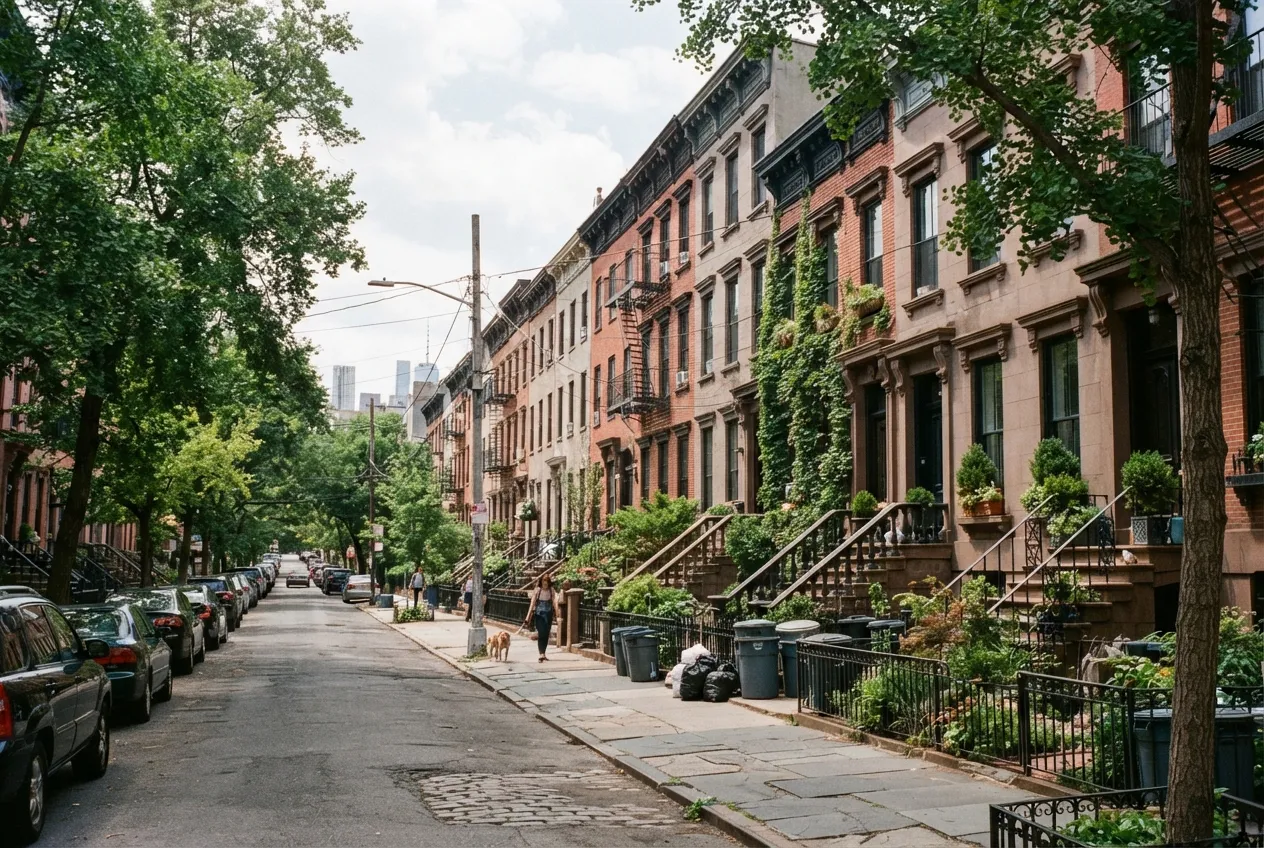
Many Cobble Hill homes were built long before modern heating equipment, and so were their chimneys. A brownstone or rowhouse flue that once carried coal or wood smoke may now vent a gas boiler, a water heater, or a fireplace that gets used a few times each winter. A properly sized liner protects the masonry, keeps exhaust moving up and out, and helps keep heat and combustion gases away from wood framing and neighboring walls. EliteFlue installs chimney liners throughout Cobble Hill in ZIP code 11231, working from our base in Fort Greene, about a mile away.
Why older Cobble Hill chimneys often need a liner
Brownstones, rowhouses and pre-war apartment buildings in the neighborhood typically have masonry chimneys with clay tile liners. Some older chimneys have no liner at all. Over the decades, mortar joints wear out, tiles crack, and moisture works into the brick. In attached homes, chimneys often run inside shared walls, so a damaged flue can affect more than one household.
A liner is the channel inside the chimney that carries exhaust out of the house. When the existing one is cracked, missing, or the wrong size for the appliance it serves, a new liner restores that channel without rebuilding the whole chimney. Common signs that a liner needs attention include:
- Bits of tile or crumbling mortar collecting in the firebox or at the cleanout
- Water stains, peeling paint or white mineral deposits on walls near the chimney
- A new boiler or water heater that needs a different flue size than the old one
- Cracks, gaps or open joints found during a chimney inspection
- Smoke or exhaust odors in the house when the fireplace or heater is running
Oil-to-gas conversions and chimney liners
When a New York City building converts its boiler from oil to gas, the chimney has to be evaluated as part of the work. A new liner is often needed because gas exhaust produces acidic condensate, and that moisture can corrode a masonry flue from the inside over time.
If you are planning a conversion, it helps to bring us in early. That way the liner can be sized to the new equipment and scheduled alongside the boiler work, rather than becoming a surprise after the old burner is already out.
How we install a chimney liner
Every liner job starts with an inspection. The NFPA 211 standard calls for a Level 2 inspection when a heating system changes, such as a new appliance or a switch of fuel, so most liner projects begin at that level. This usually includes a camera run through the full length of the flue to check its condition, size and any bends.
From there, a typical installation follows these steps:
- Measure the flue and confirm the liner size the appliance requires
- Clean the chimney so the liner can be lowered through it without obstruction
- Protect floors and furniture near the fireplace, boiler room or cleanout
- Lower the liner from the roof and connect it at the bottom to the appliance or fireplace
- Add insulation where it is called for, then seal the top and fit a cap
- Test the draft and walk you through what was done
Choosing the right liner for your home
Stainless steel liners are the most common choice for gas boilers, water heaters and many wood-burning fireplaces. They come in rigid and flexible forms, and flexible liners can follow the offsets that are common in rowhouse chimneys. Insulating the liner helps keep flue gases warm so they rise and draft properly. For some masonry chimneys with irregular or damaged flues, a poured, cast-in-place liner may be an option.
Our certified technicians match the liner material and diameter to the appliance's requirements and to the chimney itself. We explain the options and the reasons behind our recommendation before any work begins.
Timing your liner work in Cobble Hill
New York City's heat season runs from October 1 through May 31, and building owners must keep apartments heated to the city's minimum temperatures during that period. A failing flue under an active boiler can't wait, but planned liner work is easiest to schedule in late spring or summer, before the system is needed again.
Once your liner is in, NFPA 211 calls for chimneys, fireplaces and vents to be inspected once a year, which gives us a chance to check the liner, cap and connections. Beyond Cobble Hill, we install liners in nearby Carroll Gardens, Gowanus, Red Hook, Park Slope and Brooklyn Heights.
More services in Cobble Hill
- Chimney Sweep in Cobble Hill
- Chimney Inspection in Cobble Hill
- Chimney Repair in Cobble Hill
- Air Duct Cleaning in Cobble Hill