
The short answer
A chimney liner keeps heat and exhaust safely contained inside your Fort Greene chimney. Older brick flues often need relining after cracking, and a new liner is commonly needed when a building converts its boiler from oil to gas. We inspect the flue, recommend a liner that matches your appliance and fuel, and install it.
Many Fort Greene homes were built long before modern heating equipment. Brownstones, rowhouses and pre-war apartment buildings often have masonry flues that were never lined, or that were lined with clay tile that has since cracked. EliteFlue Chimney Services installs chimney liners for homes and buildings in Fort Greene and the 11205 ZIP code, working from our office right here in the neighborhood. Our certified technicians inspect the flue first, explain what we find, and fit a liner sized to the appliance it serves, whether that's a boiler, a water heater, a wood stove or a fireplace insert.
Why Older Fort Greene Chimneys Need Liners
A chimney liner is the channel inside the masonry that carries smoke and exhaust gases up and out of the house. In older brick chimneys, the original clay tiles can crack, shift or lose mortar at the joints after many heating seasons. Some flues were built with no liner at all. Gaps in the flue let heat reach nearby wood framing and let exhaust, including carbon monoxide, leak into walls, upper floors or attic spaces.
Attached homes share party walls, so a failing flue in a rowhouse or brownstone isn't only one household's problem. A sound, properly sized liner keeps exhaust inside the chimney where it belongs and protects the masonry from heat and moisture.
Oil-to-Gas Conversions and New Appliances
When a New York City building converts its boiler from oil to gas, the chimney has to be evaluated as part of the work. A new liner is often needed, because gas exhaust produces acidic condensate that can corrode a masonry flue from the inside. Left alone, that damage can loosen mortar and block the flue with fallen debris.
The NFPA 211 standard calls for chimneys, fireplaces and vents to be inspected once a year, and it treats a new appliance or a switch of fuel as a reason for a more thorough Level 2 inspection. We can work alongside your heating contractor so the liner matches the venting needs of the new equipment. Common reasons Fort Greene homeowners call us about relining include:
- Switching a boiler or furnace from oil to gas
- Replacing a boiler or water heater with a new model
- Adding a wood stove or fireplace insert to an existing fireplace
- Bringing a long-unused fireplace back into service
- Cracked or missing flue tiles found during an inspection
Liner Options We Install
The right liner depends on the fuel you burn, the appliance manufacturer's venting specifications, and the size, shape and condition of the existing flue. We measure the flue and review the appliance details before making a recommendation.
- Flexible stainless steel liners, which can follow offsets in older chimneys and are common for gas and oil appliances
- Rigid stainless steel liners for straight flues
- Insulated stainless steel liners for wood stoves and fireplace inserts
- Cast-in-place liners, which can restore and seal a deteriorated masonry flue in some situations
What the Installation Involves
Every job starts with an inspection, usually including a camera look inside the flue, so we can see cracks, gaps, blockages and how the chimney runs through the building. We clean the flue, then size the liner to the appliance. The liner is lowered in from the roof, connected to the appliance at the bottom, and finished at the top with a cap to keep out rain, debris and animals. We finish by checking the connection and draft and walking you through what we did.
New York City's heat season runs from October 1 through May 31, when building owners must keep apartments heated to the city's minimum temperatures. For that reason, many owners of multi-unit buildings plan boiler flue relining for late spring or summer. If a flue problem turns up during the heating months, we'll talk through scheduling with you so the work disrupts heat as little as possible.
Serving Fort Greene and Nearby Neighborhoods
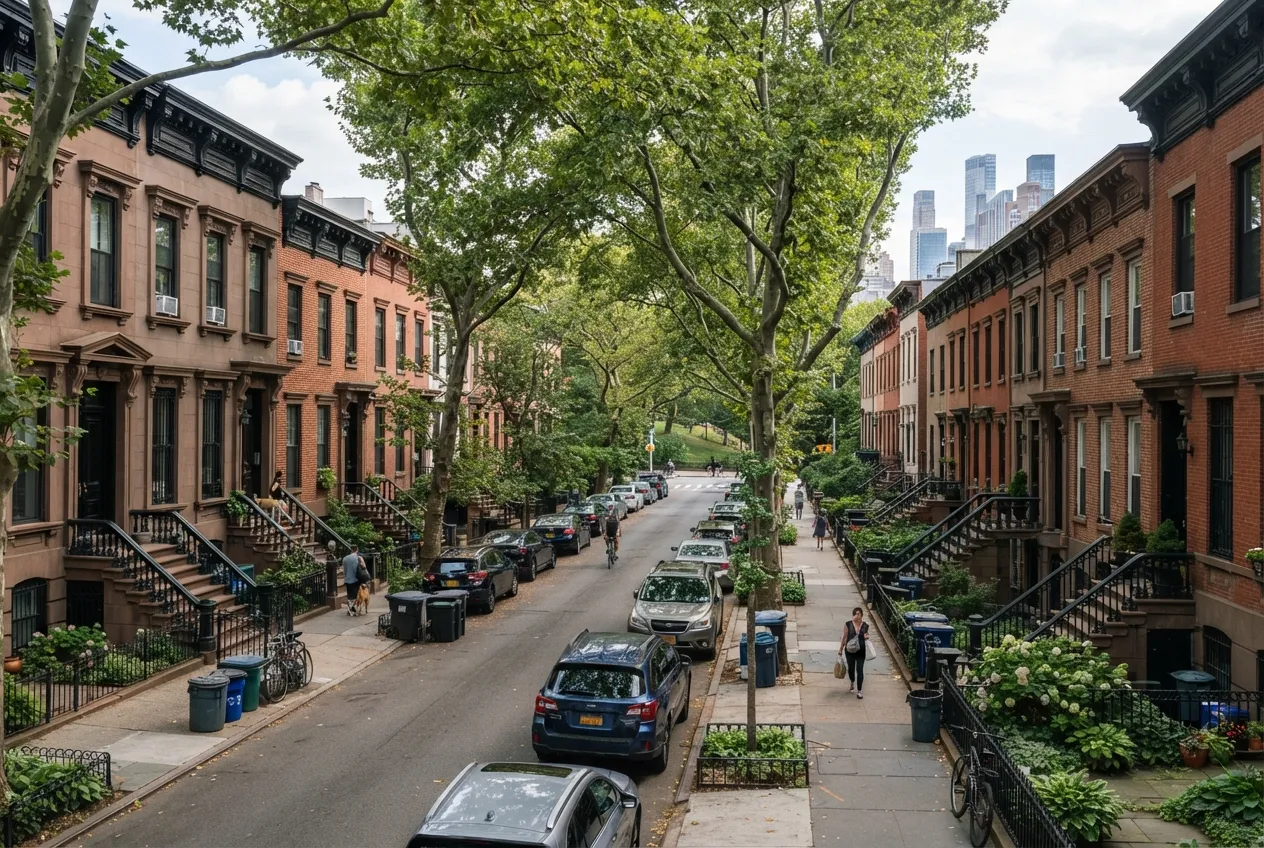
Because our office is in Fort Greene, we know the mix of brownstones, rowhouses and pre-war apartment buildings found across the neighborhood. We also install chimney liners in Clinton Hill, Downtown Brooklyn, DUMBO, Boerum Hill and Prospect Heights.
More services in Fort Greene
- Chimney Sweep in Fort Greene
- Chimney Inspection in Fort Greene
- Chimney Repair in Fort Greene
- Air Duct Cleaning in Fort Greene