
The short answer
Clinton Hill homes with fireplaces or heating flues should have the chimney inspected every year and swept whenever buildup or debris is found. EliteFlue's certified technicians, based about a mile away in Fort Greene, clean the flue, check the damper, liner and cap, and explain what they found.
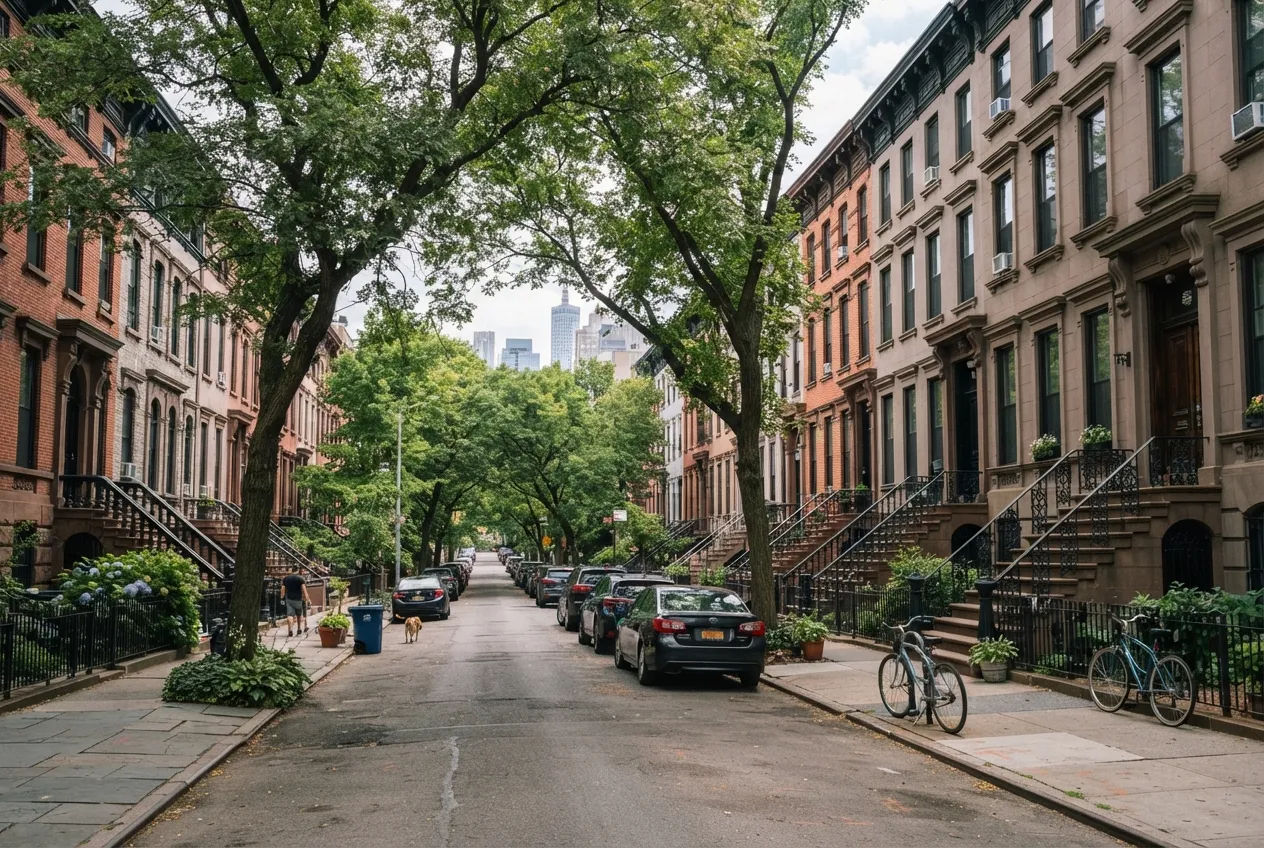
Many homes in Clinton Hill still rely on working chimneys. It might be a wood-burning fireplace in a brownstone parlor, a flue serving a boiler in a rowhouse basement, or a shared chimney stack in a pre-war apartment building. EliteFlue Chimney Services sweeps chimneys across the neighborhood from our office in Fort Greene, about a mile away. Our certified technicians clean the flue and check what they see along the way. Then they tell you plainly what condition your chimney is in and what, if anything, needs attention.
Why Clinton Hill Chimneys Need Regular Sweeping
Burning wood leaves creosote, a tar-like residue that builds up on the inside of the flue. Thin layers are dry and sooty. Heavier deposits turn sticky or glazed and can catch fire. Gas and oil appliances leave less visible residue, but they still produce soot, scale and debris that can narrow a flue over time.
Older masonry chimneys, common in the neighborhood's brownstones and rowhouses, also collect debris that has nothing to do with fires. Crumbling mortar, loose brick, leaves, and nests from birds or squirrels can all end up in the flue. A blocked flue can push smoke or carbon monoxide back into the house instead of venting it outside. In pre-war buildings where one chimney stack may hold several flues, a problem in one flue is easy to miss.
Call for a sweep if you notice a smoky smell, smoke drifting into the room, flakes of black soot in the firebox, or animal sounds inside the chimney.
What Our Chimney Sweep Includes
A typical visit follows the same basic steps, adjusted to your fireplace or appliance:
If we find glazed creosote that brushing won't remove, or damage that needs a closer look, we explain your options before doing any further work.
- Covering the hearth and nearby floors and furniture before work begins
- Brushing the flue with rods and brushes sized to the liner, with a vacuum running to control dust
- Cleaning the smoke chamber, smoke shelf and damper area, where soot tends to collect
- Removing nests, leaves and loose debris from the flue
- Checking the damper, firebox and visible liner for cracks, gaps or missing mortar
- Looking at the chimney cap and crown where they can be reached safely
- Walking you through what we found, with photos when they help
Sweeping and the Yearly Inspection
The NFPA 211 standard calls for chimneys, fireplaces and vents to be inspected once a year. Sweeping is done as needed, based on how much buildup the inspection turns up. Many homeowners schedule both in the same visit.
Chimney professionals use three inspection levels:
If you're buying or selling a home in Clinton Hill, ask about a Level 2 inspection along with the sweep.
- Level 1: for a chimney when nothing about the system has changed.
- Level 2: when the system changes, such as a new appliance or a switch of fuel, or when the home is sold.
- Level 3: when a hidden hazard can only be reached by opening part of the chimney or building.
Boiler Flues, Fuel Conversions and Heat Season
In this neighborhood, a chimney often serves the heating system, not just a fireplace. When a New York City building converts its boiler from oil to gas, the chimney has to be evaluated as part of the work. A new liner is often needed, because gas exhaust produces acidic condensate that can corrode a masonry flue. Sweeping the old oil flue first gives a clear view of its condition before the conversion is planned.
Timing matters as well. New York City's heat season runs from October 1 through May 31. During that period, building owners must keep apartments heated to the city's minimum temperatures. Having a boiler flue swept and checked before October means you're less likely to shut off heat in midwinter to deal with a blockage.
Serving Clinton Hill and Nearby Neighborhoods
Our office is in Fort Greene, about a mile from Clinton Hill, so the neighborhood is close by for our crews. We also sweep chimneys in Fort Greene, Prospect Heights, Downtown Brooklyn, DUMBO and Boerum Hill.
We can schedule a sweep around your heating needs and roof access, whether you own a single brownstone, manage a rowhouse with rental units, or oversee a pre-war apartment building.
More services in Clinton Hill
- Chimney Inspection in Clinton Hill
- Chimney Repair in Clinton Hill
- Air Duct Cleaning in Clinton Hill
- Chimney Liner Installation in Clinton Hill