
The short answer
A chimney sweep removes soot, creosote and debris from your fireplace or heating flue so smoke and exhaust can leave the house safely. In Prospect Heights, most homes should have the chimney inspected once a year, as the NFPA 211 standard calls for. Plan boiler flues before heat season starts on October 1. Plan wood-burning fireplaces before you light the first fire.
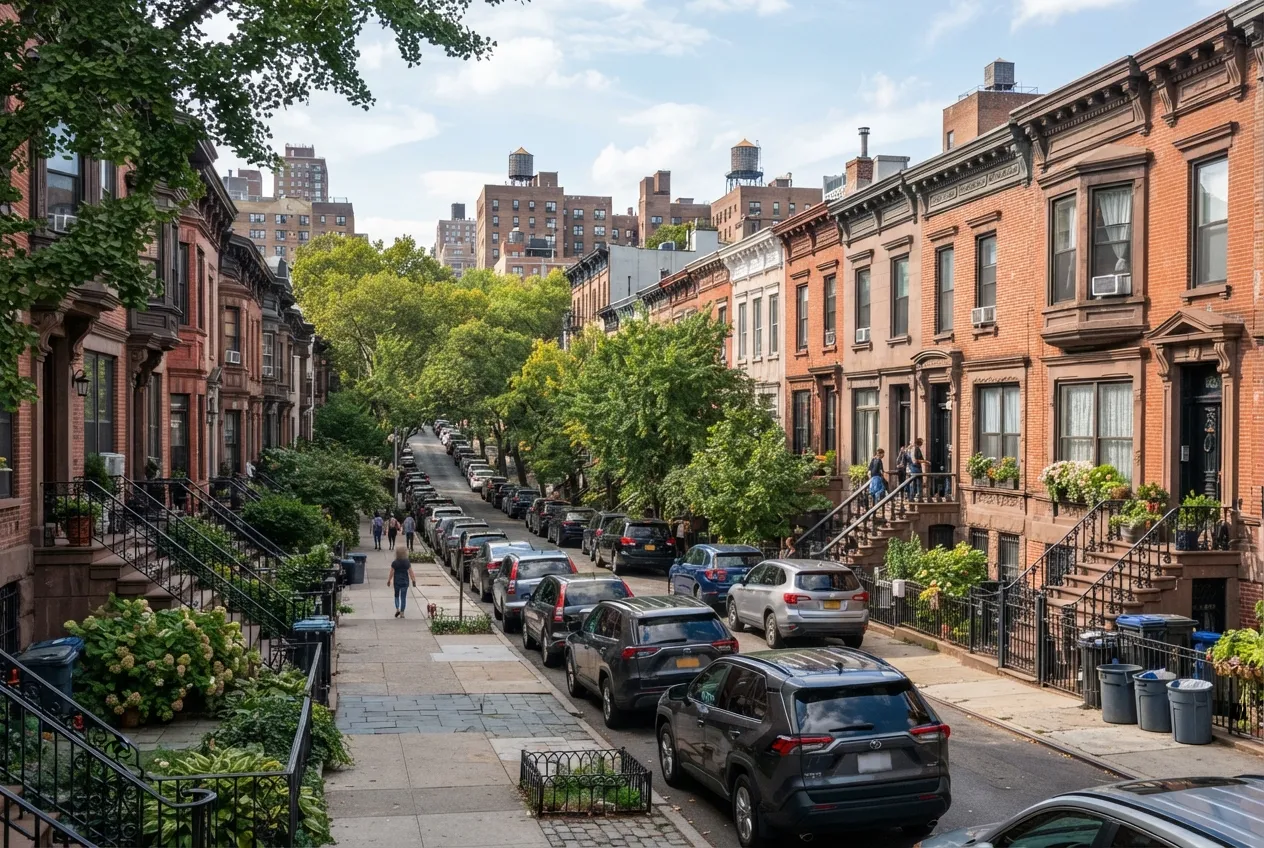
Many chimneys in Prospect Heights do more than one job. A brownstone or rowhouse may have parlor-floor fireplaces stacked above a basement boiler flue, and pre-war apartment buildings send their heating exhaust up tall masonry chimneys. EliteFlue Chimney Services sweeps both kinds. Our office is in Fort Greene, about a mile from Prospect Heights, so our certified technicians can get to your home easily. We plan each visit around how your building is actually heated and how often you use your fireplace.
What a Chimney Sweep Involves in a Prospect Heights Home
In older Brooklyn buildings, one chimney stack often holds several flues. Some serve working fireplaces, one may vent the boiler or water heater, and others were sealed off decades ago. Before we clean anything, we confirm which flue serves which appliance. That way the right passages get swept and nothing gets missed.
We cover the hearth and nearby floors, then use brushes and a vacuum to remove soot and creosote from the firebox, smoke chamber and flue. We finish with a look at the damper, the flue walls and the chimney top. Then we tell you plainly what we found.
- Identify each flue and the appliance it serves
- Protect floors and furnishings around the hearth
- Brush and vacuum the firebox, smoke chamber and flue
- Remove nests, fallen mortar and other blockages
- Check the damper, liner condition and chimney cap
- Explain what we saw and anything that needs attention
Brownstones, Rowhouses and Pre-War Apartment Buildings
Attached homes share walls, and they often share chimney masonry with the house next door. Smoke or odor coming from a neighbor's flue, or a draft problem caused by a nearby roofline, is common in rowhouse blocks. We look for signs of both during a sweep.
In pre-war apartment buildings, the chimney usually serves a central boiler, not individual fireplaces. These flues carry exhaust all winter, so soot buildup, crumbling mortar and debris at the base deserve regular attention. We work with owners, co-op boards and building managers to schedule the work so it disrupts residents as little as possible.
Timing Your Sweep Around Heat Season
New York City's heat season runs from October 1 through May 31. During those months, building owners must keep apartments heated to the city's minimum temperatures. A boiler flue that is blocked or badly sooted in January is a serious problem, so the best time to sweep heating chimneys is late summer or early fall, before the boiler runs every day.
For wood-burning fireplaces, a sweep in spring or summer clears out a season of creosote before it sits in the flue through humid weather. It also leaves you ready for the first cold night. If you only light a few fires a year, an annual inspection will tell you whether a full cleaning is actually needed.
Annual Inspections and the Three Inspection Levels
The NFPA 211 standard calls for chimneys, fireplaces and vents to be inspected once a year. Chimney professionals use three levels of inspection, and the right one depends on your situation.
A Level 1 inspection fits when nothing about the system has changed. A Level 2 inspection is used when the system changes, such as a new appliance or a switch to a different fuel, or when the home is being sold. A Level 3 inspection is reserved for cases where a hidden hazard can only be reached by opening part of the chimney or the building. Most Prospect Heights homeowners who use their fireplace or boiler normally need a Level 1 inspection along with their sweep.
Converting a Boiler From Oil to Gas
Many Brooklyn buildings have switched or are planning to switch from oil heat to gas. When a New York City building converts its boiler from oil to gas, the chimney has to be evaluated as part of the work. A new liner is often needed, because gas exhaust produces acidic condensate that can corrode a masonry flue over time.
If a conversion is in your plans, we can sweep away the old oil soot and inspect the flue. We will then tell you what condition the chimney is in before your heating contractor moves forward.
More services in Prospect Heights
- Chimney Inspection in Prospect Heights
- Chimney Repair in Prospect Heights
- Air Duct Cleaning in Prospect Heights
- Chimney Liner Installation in Prospect Heights